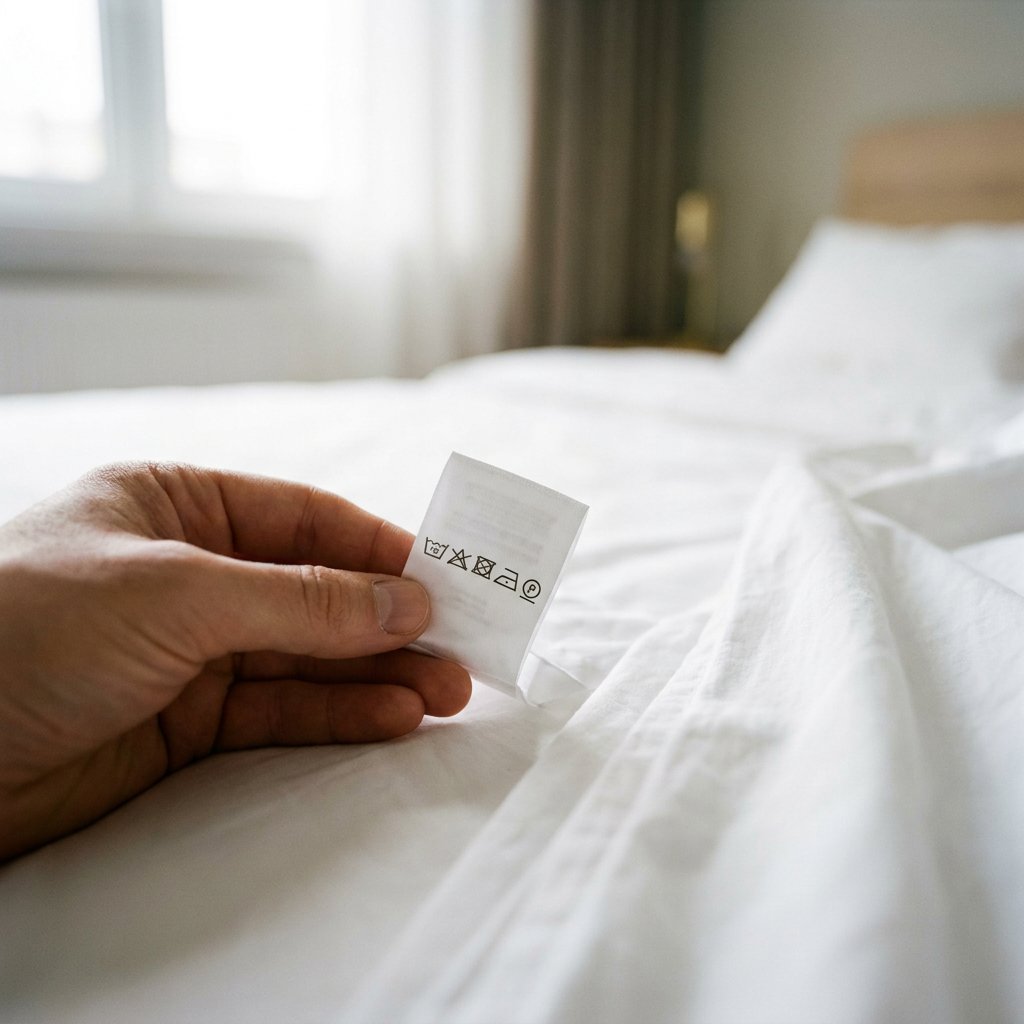

Care symbols on bedding show at a glance how to safely wash, dry, iron or bleach a product, or when to skip a treatment. That matters more than just the temperature. For duvets, flannel protectors and other thicker items, the drying symbols and gentle programs make a big difference. So always check the care label first. Materials, fillings and finishes vary by product, even with washable or anti-allergy variants. Choose a mild detergent, like laundry strips for bedding.
How to read the care label on your bedding
| Main group | Base symbol | Meaning for bedding |
|---|---|---|
| Washing | Washtub | Indicates whether you can wash the product and the maximum temperature. |
| Drying | Square or square with circle | Shows whether you need to air dry or if tumble drying is allowed. |
| Ironing | Iron | Shows how much heat is safe for sheets, pillowcases and other fabrics. |
| Bleaching | Triangle | Indicates whether bleach is allowed, limited, or not allowed. |
| Dry clean | Circle | Means that professional cleaning may be needed or allowed. |
The small symbols make the difference
- A number in the washtub shows the maximum wash temperature. So don’t wash hotter than what the label says.
- One or two lines under a symbol mean a gentler treatment. Choose a delicates or mild cycle and avoid filling the drum to the top.
- Dots on drying and ironing symbols indicate heat. More dots mean the fabric can handle more heat.
- A cross through a symbol means that treatment is not allowed, for example do not tumble dry or do not iron.
Wash without damage: machine wash, hand wash and do not wash
A plain washtub means the product can go in the washing machine as long as you follow the temperature and any extra symbols. If you see a hand in the washtub, the bedding needs a hand wash or a very gentle hand-wash cycle. If there’s a cross through the washtub, washing is not allowed.
Always pick the right cycle, don’t overfill the drum and never wash hotter than the label allows. That matters even more for thicker bedding like duvets, duvet inserts without covers, flannel mattress covers and mattress protectors. For waterproof versions this is extra important; read all about washing a waterproof flannel protector. For delicate or filled products, airing can be smarter than washing if the label is strict. The material and filling ultimately decide what stays safe. For hygiene, it also helps to know how often to wash a duvet and how to remove stains from a washable duvet before you start the wash.
Drying without shrinkage or clumps
The drying symbol shows whether a product can go in the dryer, cannot go in the dryer, or should only be dried on low heat. With delicate fabrics and filled products, a low temperature and a short cycle are especially important. That way you reduce the risk of shrinkage, distortion, and clumped filling. For filled products, practical drying tips help you choose the right wash and dry combo; see drying a duvet: here’s how.
If the label is strict, air drying is often the safest choice. Always let duvets, moltons, and mattress protectors dry completely before using or storing them again.
Bleaching, ironing, and dry cleaning explained in short
- The triangle is about bleaching. A plain triangle means bleaching is allowed, a triangle marked chlorine-free points to oxygen bleach only, and a crossed-out triangle means do not bleach.
- The iron uses dots: 1 dot is low temperature, 2 dots medium, and 3 dots hot. Ironing can be useful for fitted sheets and pillowcases, but is often unnecessary or less suitable for thicker items.
- A circle indicates dry cleaning. That can be a smart choice for large, delicate, or specially finished products if the label advises against home washing.
How to use the symbols for duvets, fitted sheets, pillowcases, and moltons
- Fitted sheets and pillowcases are flat textiles and usually need a simpler wash routine than filled items.
- Duvets, including a washable duvet without a cover, and moltons or mattress protectors need more space in the drum and often more drying time.
- Even with washable or anti-allergy versions, the specific label decides whether 60 degrees, tumble drying, or a gentle cycle is suitable.
- Always check three things before washing: does the product fit well in the drum, can it dry completely, and have you checked the label one more time, especially if you’re unsure about the right washing machine capacity for your duvet?