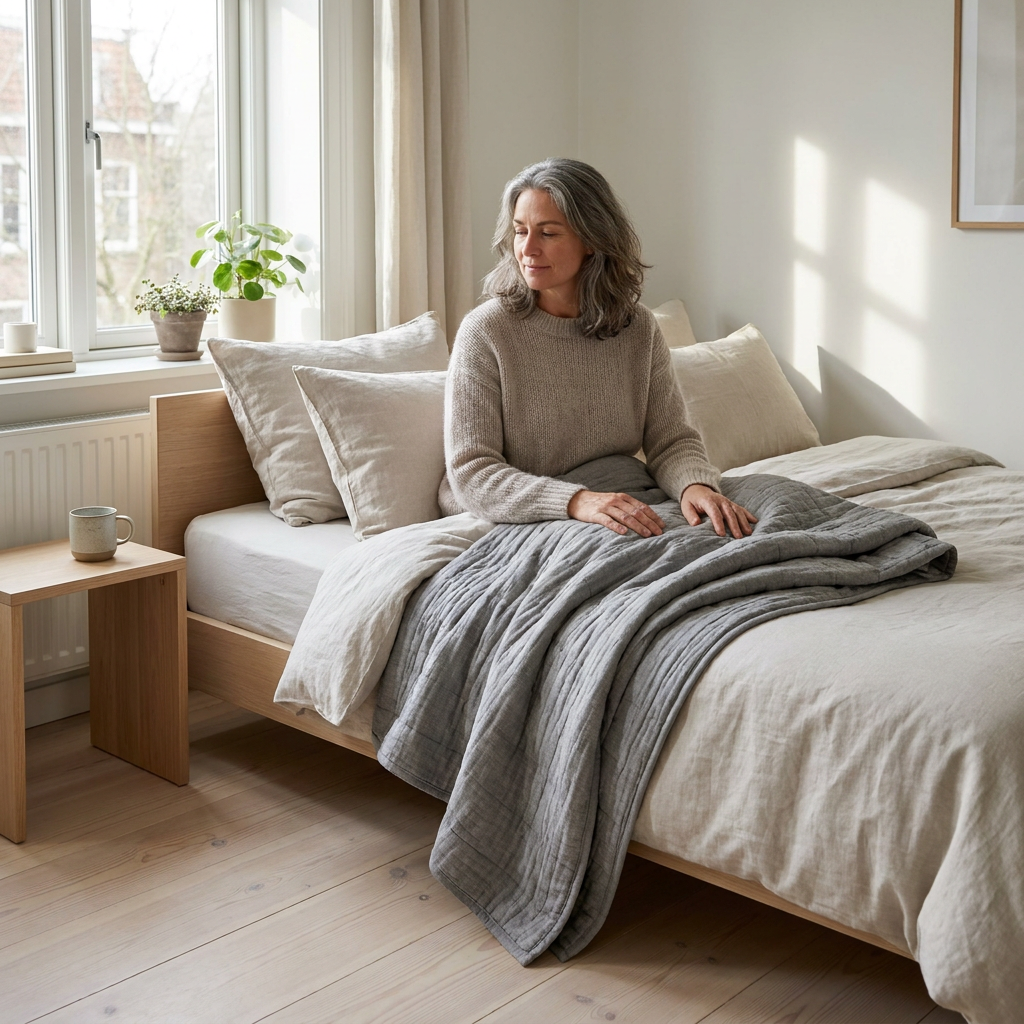

A weighted blanket can feel soothing and add a sense of security, but safe use always comes first. Not everyone responds the same to extra weight, warmth, or pressure while sleeping or relaxing. On this page you’ll find a clear overview of possible side effects, what to watch out for, and when a weighted blanket may be less suitable.
This helps you judge whether this type of blanket suits you and how to start in a calm, responsible way.
Possible side effects of a weighted blanket
Most concerns are about comfort, freedom to move, and body temperature. A weighted blanket should feel calming, not stifling or burdensome.
- Overheating\u00a0extra weight and a closer fit can make you warm up faster, especially if you sweat a lot at night.
- A claustrophobic feeling\u00a0some people enjoy the pressure, others find it unsettling or stifling.
- Harder to turn or get up\u00a0especially if the blanket feels heavy for your body or mobility level.
- Restless sleep from the wrong choice\u00a0an overly heavy or oversized blanket can disturb rather than help.
- Pressure on sensitive joints or muscles\u00a0this can be uncomfortable if you’re already sensitive to pressure.
If you sleep worse, feel more restless, or want to take the blanket off quickly, that’s a sign the weight or the way you use it doesn’t suit you.
When is a weighted blanket safe to use?
A weighted blanket is generally safe when you can move it yourself, take it off on your own, and tolerate it comfortably. Your breathing should never be restricted and you should be able to move freely.
Pay attention to these basics in daily use:
- Pick the right weight\u00a0heavier isn’t better.
- Start with short sessions\u00a0try it during a calm moment or for part of the night.
- Check your comfort\u00a0you should feel relaxed, not stuck, short of breath, or overheated.
- Use it on a normal, flat sleeping surface\u00a0this keeps pressure evenly distributed.
- Stop right away if you notice issues\u00a0for example if you feel short of breath, overheated, or have clear muscle or pressure discomfort.
If you are not sure which weight or size is suitable, check out weighted blankets for adults for practical guidelines and tips.
Who should be extra careful?
Not everyone has the same level of comfort or freedom of movement under a weighted blanket. Extra caution is wise if you notice that lifting, turning, or freeing yourself from bedding is difficult.
In any case, be alert if:
- you quickly feel short of breath or claustrophobic
- you have limited mobility and find it hard to move a heavier blanket
- you are sensitive to heat and overheat quickly in bed
- you have pain symptoms that could worsen due to extra pressure on muscles or joints
If you are unsure whether a weighted blanket is sensible in your situation, it is smart to seek personal advice from a doctor or other healthcare professional first. Especially with medical issues, caution matters more than experimenting, for example for people with allergies or other physical sensitivities.
What should you pay attention to when choosing?
A large part of safety lies in the right match between blanket and user. So do not just focus on the idea of a weighted blanket, but especially on the practical features.
| What to look for | Why this matters |
|---|---|
| Weight | A blanket that is too heavy can feel uncomfortable, warm, or restrictive. |
| Size | The blanket should rest well on your body without pulling or sliding unnecessarily. |
| Breathability | Helps limit heat build-up during use. |
| Material | Important for comfort, skin feel, and daily use. |
| Finish and distribution | An even distribution of weight feels more stable and comfortable. |
At The HappyBed, a weighted blanket for stress and anxiety comes in a 150x200 cm size and weighs 7 kg. The cover is 100% polyester and the filling is hollow fiber and glass microbeads. It is also described as hypoallergenic and breathable. Those are useful product features, but it is still important to assess whether this weight and feel really suit you.
What does a weighted blanket do to your body?
A weighted blanket applies even pressure across the body. Many people find that soothing or comforting. At the same time, that very pressure is why comfort and safety are personal: what feels good for one person can be too heavy or too warm for another.
That’s why the best test isn’t just what a product promises, but how your body responds during real use. Does it feel calming, light, and pleasant? Then it could be a great match. Does it feel heavy, agitating, or tiring? That’s a sign to stop or to rethink your choice, or consider an alternative to a weighted blanket (Dreambag).
Practical tips to start safely
- Start slow - use the blanket briefly at first to see how your body responds.
- Watch your temperature - if you overheat quickly, don’t use the blanket for long stretches.
- Check your freedom of movement - you should be able to turn easily and push the blanket off you.
- Don’t force it - easing into it is fine, but clear discomfort is not a good sign.
- Use only as long as it feels good - comfort is a requirement for safe use.
FAQ
What are the downsides of a weighted blanket?
The most mentioned downsides are heat build-up, a claustrophobic feeling, less freedom of movement, and discomfort when the blanket is chosen too heavy. The experience varies greatly from person to person.
Who should not use a weighted blanket?
People who have trouble breathing, get short of breath easily, have limited mobility, or are extra sensitive to pressure and heat should be especially careful. If you have doubts or medical concerns, getting personal advice is wise.
How do you know a weighted blanket isn’t right for you?
Signs include more restless sleep, shortness of breath, overheating, irritation from the pressure, or feeling like you can’t move as easily. In that case, it’s better to stop using it.
Is a trial period useful for a weighted blanket?
Yes, because you only really feel comfort and safety at home. At The HappyBed, a 30-day trial period is confirmed for the weighted blanket so you can assess whether the weight and feel are right in your own sleep environment. If maintenance matters to you, take a look at washable weighted blankets.