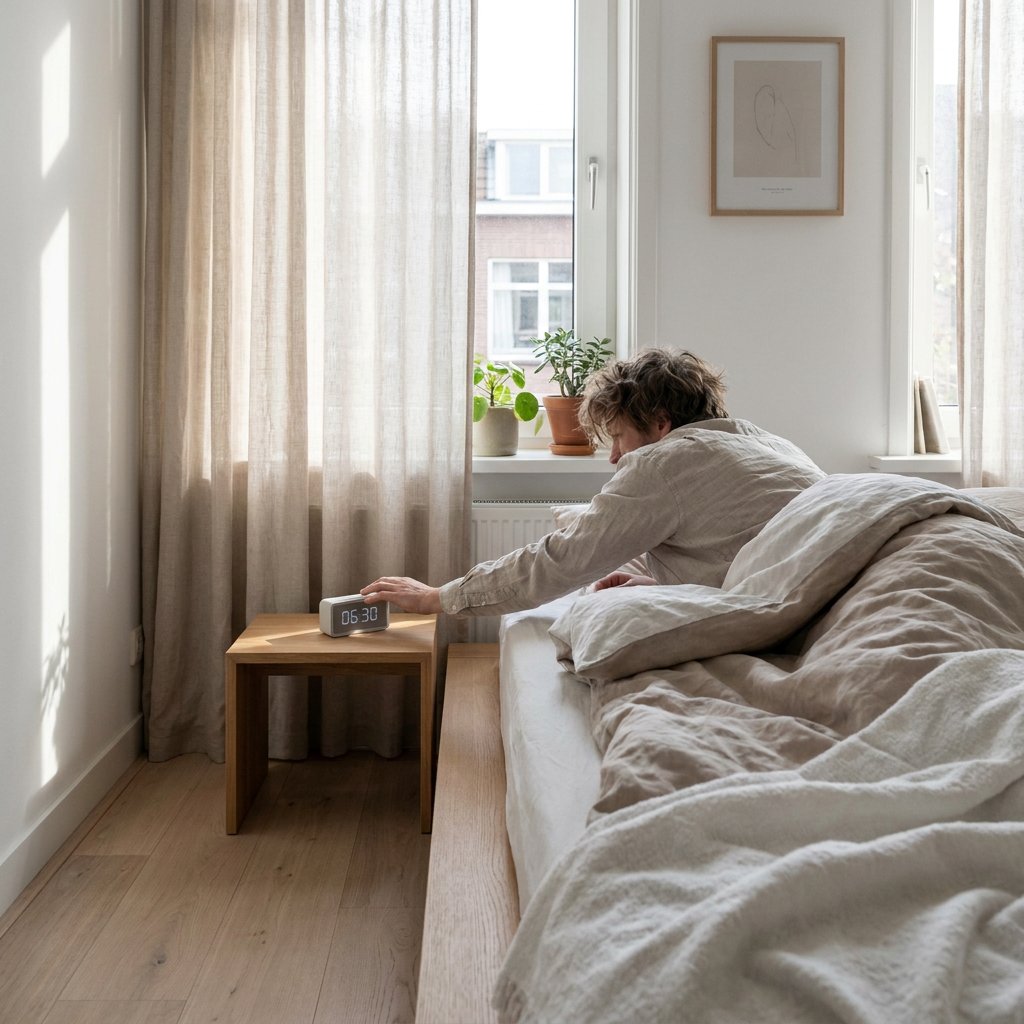

In short: no, snoozing isn’t automatically bad. But frequent, long snoozing usually makes the last part of your sleep less calm and less restorative. It mainly comes down to three things: how often you hit snooze, how long that snooze window lasts, and whether you’re actually getting enough sleep.
If you snooze once in a while, it’s not necessarily a problem. If getting up turns into a daily battle with multiple alarms, it’s worth looking beyond the snooze button. Below you’ll find what happens during snoozing, when it can still work fine, and what helps if waking up feels hard every day.
What happens to your sleep when you snooze
Snoozing means your alarm wakes you up, then you sleep on in one or more short stretches. Those extra minutes can feel like a win, but physiologically they’re usually fragmented sleep moments. Your body shifts toward wakefulness, then tries to fall asleep again. More about how your sleep cycle works helps explain why repeated snoozing makes you sleep lighter.
That’s why that last bit of sleep is often lighter and less efficient than one continuous block. Not worthless, but less stable. Especially if you set multiple alarms in a row, your brain keeps getting the signal to switch modes. Repeated alarms can also trigger a mild stress response, simply because your system is put on alert again and again. That’s a key reason snoozing can feel less pleasant than sleeping through to your actual wake-up time.
Why snoozing can make you groggier
Many people know sleep inertia: that foggy, sluggish feeling right after waking up. You’re awake, but your brain and body aren’t fully up to speed yet. Snoozing can prolong that transition, because after each alarm you dip back into a bit of sleep and the wake-up process starts over.
That can make you think snoozing is bad, while it’s mainly the back-and-forth between sleeping and getting up. It’s not the same for everyone, though. Some committed snoozers actually experience a gentler start to the morning and feel less abrupt awakening. Limited snoozing also doesn’t have to worsen your mood or immediate thinking skills. It’s mainly long dozing or many repeated alarms that increase the chance you get up groggier instead of fresher. If you want a quick daytime boost, a power nap: what’s the ideal length? is often a healthier alternative than repeated snoozing.
When snoozing is fine — and when it’s a red flag
How “bad” snoozing is usually depends more on pattern and duration than on the button itself. One short snooze is different from half an hour of broken sleep.
| Situation | Usually not a big deal | Less helpful or a warning sign |
|---|---|---|
| How often? | Occasionally snoozing once after a short night or a busy morning. | Needing multiple alarms almost every day to get out of bed. |
| How many minutes? | A short snooze can work for some people. | If your snooze window creeps toward twenty to thirty minutes, sleep gets fragmented faster. |
| Effect on your rhythm | Snoozing doesn’t automatically disrupt your body clock. | An irregular sleep schedule and too little morning light usually matter more than those few minutes of dozing. |
| What’s smarter? | If limited snoozing works for you, keep it truly limited. | If you need those extra minutes, setting your alarm for your real get-up time is often smarter than repeatedly interrupting your sleep. |
If you snooze every morning, the real issue is often elsewhere
People who snooze every morning often don’t have a snooze problem so much as a sleep quality or rhythm problem. Too little total sleep, going to bed too late, or a wake-up time that doesn’t fit your natural rhythm often play a bigger role. Habitual snoozers also tend to be more evening-oriented, which makes early alarms feel extra tough. You’ll find practical tips in poor sleep: 5 tips.
So look at the bigger picture: do you feel rested during the day and function well? More time in bed isn’t automatically better. Both short sleep and long but restless sleep can keep morning grogginess going, especially if you do little to reduce sleep interruptions.
How to make getting up easier without hitting snooze
If getting up is tough, it usually helps more to work on your morning and your night’s sleep than to add yet another alarm.
- First make sure you get enough sleep. If you consistently go to bed too late, snoozing will keep feeling tempting because your body simply still needs sleep. Not sure? Check how much sleep adults need.
- Keep your wake-up time as stable as possible, weekends included. A regular rhythm makes waking more predictable than alternating sleep-in days with early workdays.
- Set your alarm for the time you actually want to get up. That way you avoid repeatedly interrupting your sleep with extra alarms that don’t help you feel more rested anyway.
- Get daylight as soon as you can and get out of bed when the alarm goes off. Light is a clear start signal for your body clock and helps your alertness ramp up faster.
- Keep your first minutes simple and fixed. Think get up, open the curtains, drink water, get dressed, and only then check your phone. A set routine stops you from renegotiating with yourself every morning.
- Improve your sleep quality at night too. A dark, quiet bedroom and basics like good pillows, a duvet that matches your warmth needs, or a sleep mask if there’s too much light can make a real difference. Also check the 5 signs your bedding is hurting your sleep if you suspect your sleep environment is letting you down. At HappyBed we focus on hassle-free comfort, like easy-care bedding that helps keep your sleep space fresh and effortless.
When morning fatigue is more than a habit
Frequent snoozing deserves extra attention when it goes hand in hand with clear daytime sleepiness. If you need multiple alarms every day, nod off unintentionally, or struggle to stay awake at work or while driving, there may be more going on than just a habit. The same applies if a partner notices breathing pauses, loud snoring, or very restless nights.
Waking up exhausted despite enough time in bed can also point to a broader sleep issue. Don’t just look at your alarm, look at your overall sleep quality and rhythm. If these signs keep returning, it’s wise to seek professional help, for example via your GP. Not to make it heavy, but to prevent ongoing morning fatigue from running your days.