


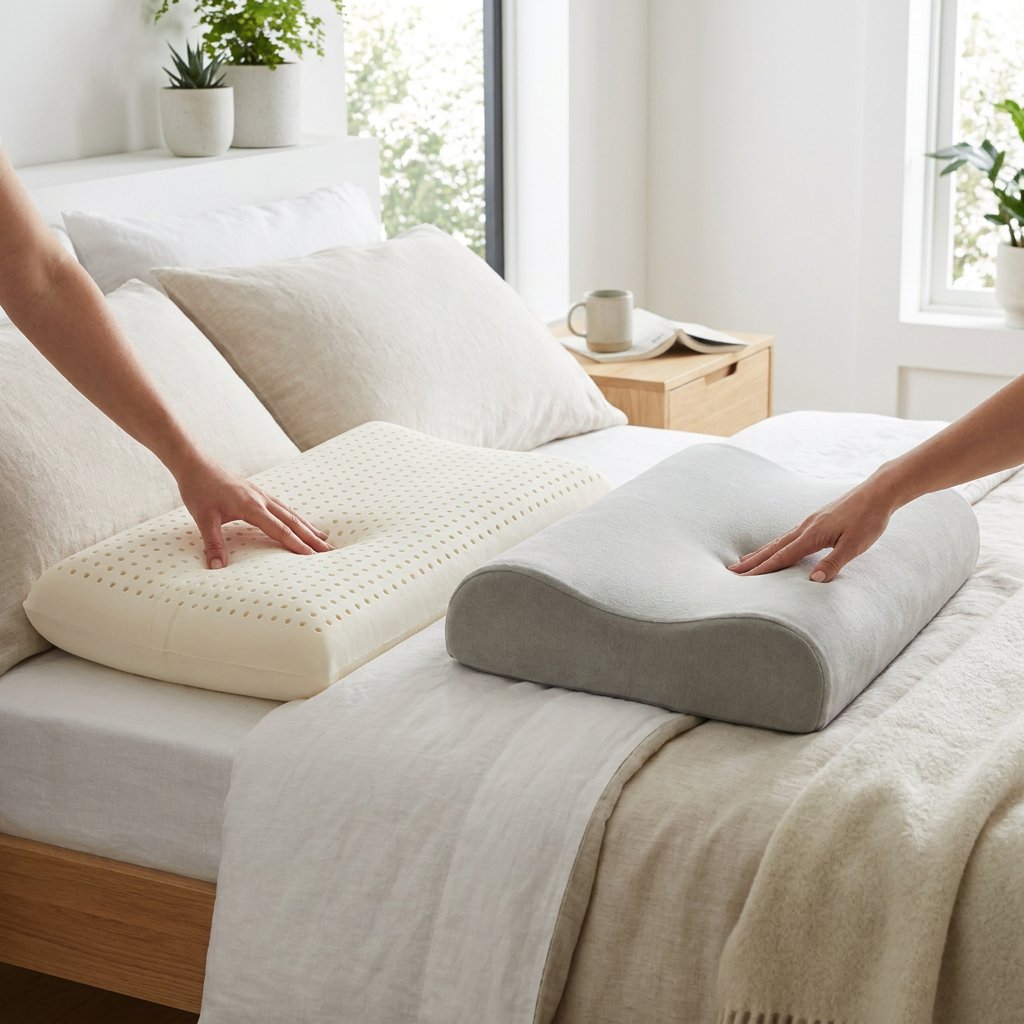

Doubting between a latex or memory foam pillow? Choose latex if you like a bouncy, cooler, and slightly firmer feel. Choose memory foam if you want a pillow that molds to your head and neck and spreads pressure more evenly. From there your sleep position, how warm you sleep, and how much you move in bed decide the difference between a great pick and a pillow that just doesn’t feel quite right.
The differences you really notice while sleeping
Latex and memory foam can both be comfortable, but they clearly feel different. It mainly comes down to how fast the pillow responds, how much pushback you feel, and whether you prefer to lie on your pillow or a little more in it.
| Aspect | Latex | Memory foam |
|---|---|---|
| Feel | Bouncy and immediate | Contouring and calmer |
| Support | Even with more pushback | Adapts to head and neck |
| Temperature | Often airier and cooler | Can feel warmer |
| Movement in sleep | Responds quickly when you turn | Slower bounce-back |
| Often suits | Hot and restless sleepers | Side and back sleepers who want pressure relief |
When a latex pillow fits better
A latex pillow usually feels firmer and more lively than memory foam. It springs back quickly, so you get instant support as soon as you lay down your head or turn. That’s great if you move a lot in your sleep and don’t like a sinking feel. Latex is also known for good airflow, especially in quality models with an open structure. That’s why it’s often a solid choice for hot sleepers. If you want a pillow that keeps its shape and feels stable for a long time, latex is a safe bet. Keep in mind that latex contours less. If you want very targeted pressure distribution around neck and shoulders, memory foam often feels more personal.
When memory foam is the better choice
Memory foam, also known as viscoelastic foam, responds to pressure and molds to the contours of your head and neck. That makes the support feel more precise than latex. Side and back sleepers especially like this, because the pillow helps fill the space between neck, shoulder, and mattress more evenly. If you want targeted support for neck and shoulders, memory foam can also feel more comfortable. The flip side is that the material is denser and can get warmer. Modern versions with ventilation channels or a breathable cover often reduce that, but the feel is usually less airy than latex. If you like a firm pillow that doesn’t push back too quickly, memory foam pillows are often a logical choice. Want to know exactly what to look for? Read Best memory foam pillow: what should you look for?.
What suits your sleep position?
Material matters, but your pillow’s height and shape are just as important for great sleep comfort. Want to match materials to your sleep position? Read Choosing the best pillow by sleep position and fill.
Side sleeper
With pillows for side sleepers you usually need more height so your head stays aligned with your spine. Memory foam often works well if you care about contouring and pressure relief. Latex is better if you toss and turn a lot or want a cooler, bouncier feel.
Back sleeper
Back sleepers usually feel best with medium height support. Both latex and memory foam can work well. Choose latex if you want a more responsive, airy feel, and memory foam if you prefer more contouring support under your neck and the back of your head.
Stomach sleeper
For stomach sleepers, a thick or firm pillow is usually less suitable, because your neck ends up at an awkward angle faster. In this position, a low profile is often more important than the material itself. So choose a slim model, like pillows for stomach sleepers, or see if you sleep better with very little pillow at all.
What else should you look at besides the material?
Height, shape and ventilation
- Mind the height: your neck and head should stay in as straight a line as possible.
- Look at the shape: an ergonomic model, like an orthopedic pillow, can feel great if you want consistent neck support.
- Check the ventilation: if you sleep warm, air channels and a breathable cover are extra important.
Care and allergies
A fresh pillow often sleeps better. So go for a model with a removable cover you can throw in the wash. If you’re allergy‑prone, latex and memory foam are both popular, but the cover and overall maintenance matter a lot too.
Always check what’s truly washable
With some pillows only the cover can go in the washing machine, not the core itself. Always check the care label and product info. Especially if convenience and hygiene matter to you, it helps avoid disappointment.
What’s better: latex or memory foam?
There’s no material that’s better for everyone. Latex is often the best pick if you want to sleep cool, move a lot, and enjoy springy support. Memory foam suits you better if you’re after contouring support and a calmer, cradled feel. Not sure? Don’t just look at the material. Consider adjustable pillows too, and focus on your sleep position, desired height, and temperature preference.
Frequently asked questions about latex and memory foam pillows
What’s the difference between memory foam and latex?
Memory foam adapts to your head and neck and gives a more contouring feel. Latex springs back faster and feels firmer and more direct. The biggest difference is the mix of support, temperature, and how the pillow responds when you move.
Is a latex pillow good or not?
Yes, for many sleepers a latex pillow is a great choice. Especially if you like bounce, ventilation, and stable support. It’s just less suitable if you specifically want a pillow that molds very precisely to your neck and head.
Do memory foam pillows get warm?
It can. Memory foam is usually denser than latex and therefore often feels warmer. A breathable cover, ventilation channels, and a cool bedroom can help, but hot sleepers often still prefer latex.
Which pillow for fibromyalgia?
There isn’t one best option for everyone. Many people want a pillow that spreads pressure well, gives stable support, and doesn’t feel too firm. Memory foam often feels softer and more contouring, while latex moves with you more easily. Choose based on comfort, and if complaints persist, get personal advice.
Is a pillow’s shape just as important as the material?
Yes, absolutely. Great materials only really help when the height and shape suit your body too. Side sleepers especially notice quickly if a pillow is too low, too high, or doesn’t align well with the shoulder and neck.
A good pillow makes a big difference, but a fresh, easy-to-maintain bed helps just as much for better sleep comfort. That’s why at HappyBed we look not only at how something feels to lie on, but also at how simple it is to use, from pillow to fully machine-washable duvet.



