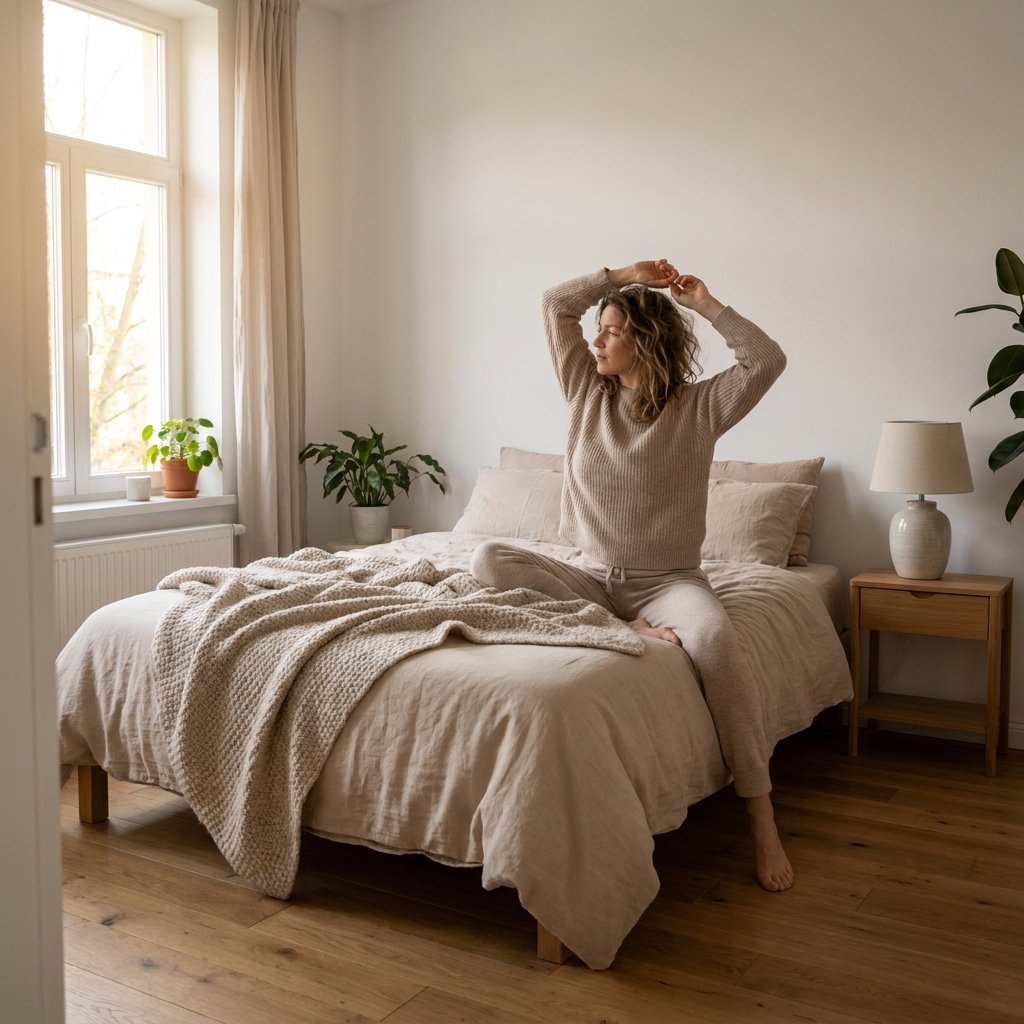

Daylight is the most important external cue for your body clock. Light early in the day especially helps your body wake up, feel alert, and get active, so later in the evening you naturally get sleepy on time. If you get too little daylight during the day, or a lot of bright and blue light in the evening, your sleep rhythm can shift. The good news: with a few simple habits at home and at work, you can use light more smartly for better sleep.
How daylight keeps your body clock on track
Daylight is much stronger than ordinary indoor light, so it gives your body a clearer signal that it’s daytime. Through your eyes, light helps your internal clock sync the rhythm of alertness, cortisol, and melatonin. You feel it as more energy and focus during the day, and at night as that real sense you’re ready for sleep. That’s exactly why morning light makes such a difference for daylight and sleep. Find more background in our guide to the sleep cycle.
What too little daylight and too much evening light do to sleep
Too little daylight during the day blurs the line between day and night for your body. Getting up can feel harder and daytime fatigue builds faster. On the flip side, bright or blue light in the evening can push your rhythm later, which makes falling asleep, sleeping through the night, and waking up refreshed more difficult. Want to be more intentional about it? Read more about screen time before bed. Your body can adapt to late light, which makes going to bed early feel less natural. Ongoing sleep troubles can strain your focus, reaction time, and health.
Light moments that help or hinder sleep
| Moment | What helps | What works against you |
|---|---|---|
| Morning | Get outside as early as you can. Outdoor light is stronger than indoor light, even on cloudy days. | Staying indoors in dim light for long stretches. |
| Daytime | Take outdoor breaks and work near a window. Window light helps, but it doesn’t fully replace outdoor light. | Sitting under artificial light all day. |
| Evening | Dim lights and limit bright screen time in the last hours before bedtime. | Harsh lighting and long scrolling right before bed. |
| At night | Sleep as dark as possible and consider using satin sleep masks if blackout is difficult. | Turning on bright light every time you wake up at night. |
Frequently asked questions about daylight and sleep
General tips often help, but with recurring sleep issues it’s smart to look beyond daylight alone.
How much daylight is enough per day?
For many people, 20 to 30 minutes of outdoor light early in the day is a useful rule of thumb. Outdoor light is stronger than indoor light, even when it’s cloudy. If you mostly work indoors, you’ll often benefit from set outdoor moments and a workspace close to daylight. Scattered minutes count, but morning light usually carries the most weight.
Is a daytime nap a good idea?
A short nap earlier in the day can be fine, but long or late naps often lower sleep pressure for the night. If you have trouble falling asleep, you’ll usually benefit more from morning daylight and a fixed wake-up time than from extra daytime sleep. If you often feel the need to nap, that can also point to too little night sleep or a disrupted rhythm. If you have to sleep during the day due to shift work, check out sleeping after night shift.
Why do many people wake up between 3 and 4 a.m.?
Waking up at night isn’t just about light. Stress, a warm bedroom, alcohol, noise and a shifted rhythm can also play a part. The timing of caffeine and sleep also matters for many people. Lots of bright light in the evening can push your melatonin rhythm later and make the night more restless, but it isn’t always the only cause. First look at your evening routine, bedroom, alcohol use and bedtime before jumping to conclusions.
What helps if you’re a very light sleeper?
Sleeping very lightly can be linked to light, noise, temperature or tension. What often helps: consistent sleep and wake times, enough daylight during the day, fewer stimuli in the evening, a dark, quiet bedroom and possibly satin sleep masks. If it keeps coming back and you clearly notice it during the day, getting further medical advice is wise.