


If you’re torn between a 4-season kids’ duvet and a separate summer duvet, there’s a simple rule of thumb. For most families, a 4-season duvet 140x200 is the most practical choice for a single or kids’ bed, because one duvet covers multiple temperatures. Use the light layer in warmer months, the fuller layer in spring and autumn, and snap them together for a warmer winter duvet. Still, a summer duvet can be smarter if your child sleeps hot or the bedroom stays warm year-round. The best choice depends not just on the season, but also on your child’s sleep habits, the bed size, the material, and how easy you want washing to be.
When flexibility really makes the difference
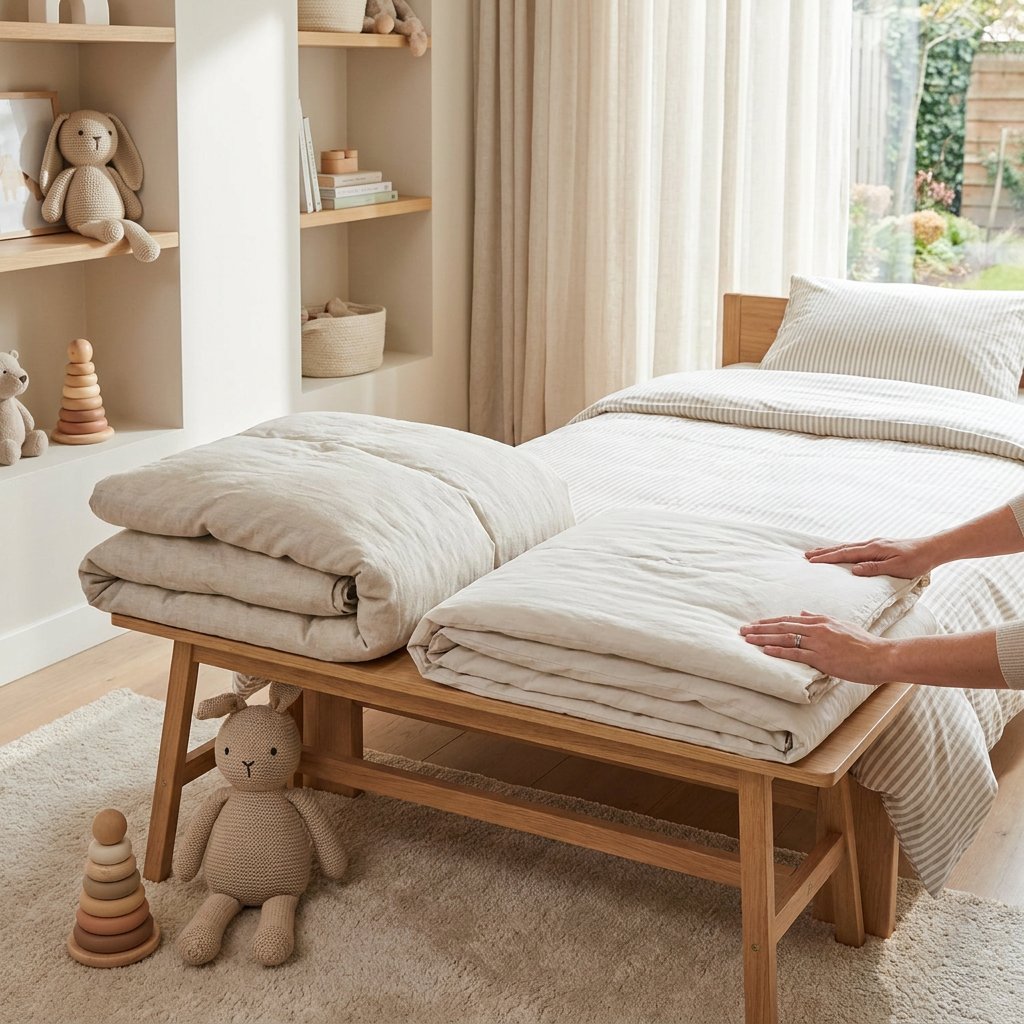
A 4-season kids’ duvet is ideal if the temperature in the kids’ room shifts noticeably throughout the year. It usually comes as two separate parts: a light summer layer and a slightly warmer layer for spring and autumn. With snap buttons or loops you combine them into a warmer winter duvet. That’s handy if you don’t want to buy, store, and swap multiple duvets.
It’s also the most logical pick for parents who like to be prepared. Kids can sleep cool for a while and much warmer a few months later. With a 4-season kids’ duvet you can adjust quickly without buying a new one. Keep in mind that warmer isn’t automatically better. A good model feels light, breathes well, and suits the room and the child, not just the calendar.
When a summer duvet is the smarter move
A summer duvet can be the best option if your child heats up fast, sweats at night, or sleeps in a well-insulated room. You often see that in attics, new-build homes, or rooms where the temperature barely fluctuates. A light summer duvet 140x200 feels airier and helps prevent stuffy sleep.
If the bed is mainly for sleepovers or only used in warmer months, a standalone summer duvet is often enough. The downside is you’ll usually need a second duvet for colder periods. If you want maximum simplicity with minimal swapping, you’ll often land back on a 4-season option.
Material, airflow, and easy care without the fuss
When choosing a kids’ duvet, material and washability matter just as much as warmth. Cotton is popular because it’s soft, breathable, and absorbs moisture reasonably well. That’s why many parents search for a toddler cotton duvet 4-season. Especially for children who get warm quickly, cotton can feel great.
Synthetic fillings are loved because they’re often light, dry fast, and are easier to wash in many cases. That’s practical in a family where spills happen or fresh bedding is a priority. Always check the care label. Not every duvet can be washed at 60 degrees, not every model can go in the dryer, and a large single size doesn’t always fit in a standard washing machine.
Also look for clear product info. A cotton cover doesn’t automatically mean the filling is cotton too. And terms like anti-allergy don’t mean much without extra context. It’s better to look for concrete features like washability, breathability, and certifications like OEKO-TEX, which say something about tested fabrics. For families who want convenience, a fully machine-washable duvet is extra nice. A kids’ duvet without a cover can also make making the bed much faster, which is especially handy on busy mornings or after a nighttime accident. Read more: How to choose the perfect coverless duvet for a kids’ room.
The right kids’ duvet size for each bed type
The right kids’ duvet size depends more on the bed than on age alone. For a cot, 100x135 cm is common. For a toddler bed, 120x150 cm is typical. If your child already sleeps in a single bed, 140x200 cm is usually the standard. So for a 4-year-old, both a toddler size and a single size can be right, depending on the bed they sleep in. Not sure? Read Choosing the right kids’ duvet size: by age and bed type.
Avoid going way too big for a small bed, because it bunches up more and doesn’t lie as neatly. A duvet that’s too small is inconvenient too, since shoulders and feet go uncovered more easily. Start with the mattress first, then consider age. You can also check the duvet size chart for extra guidance.
Warmth class and the bedroom go hand in hand
With a 4-season kids’ duvet you’ll often see warmth class 4 for the thin summer layer and warmth class 3 for the spring and autumn layer. Together they usually form warmth class 1, the warmest combo. That’s helpful as a guide, but it’s not a rule. A warm sleeper often does fine with the light layer even outside summer. A child in a cooler room may prefer the warmer layer sooner.
So don’t just look at the label, look at real life. If your child wakes up clammy, the duvet is probably too warm. If they burrow deeper or feel cold, a bit more warmth makes sense.
Frequently asked questions about a 4-season kids’ duvet
Which duvet for a 4-year-old?
That mainly depends on the bed and how warm your child sleeps. In a toddler bed, a smaller size is often enough. In a single bed, 140x200 cm is common. A 4-season kids’ duvet is often the safest, most practical choice if you don’t want to swap every season.
What’s the best kids’ duvet?
There isn’t one best for every child. Look at size, material, breathability, care instructions, and whether your child sleeps hot or cold. A good duvet feels comfy, suits the room, and is easy to keep fresh.
From what age can a child sleep under a duvet?
A loose duvet usually isn’t recommended for very young babies. Many parents switch later, when their child is older and sleeps in a toddler bed. Always follow current sleep guidelines from your clinic, pediatrician, or another reliable source, because safety and temperature regulation matter most.
Is a toddler cotton duvet 4-season a good choice?
Yes, it can be a great pick if you want a breathable material and like bridging multiple seasons with one duvet. Do check whether only the cover is cotton or the filling too, because that changes feel and care.
How often should you wash a kids’ duvet?
That depends on the material and usage, so always follow the product’s care label. Regular airing already helps a lot. With stains, night sweats, or accidents, wash sooner. For maximum convenience, a fully machine-washable duvet is often the most practical choice in a family with kids.
If you mainly want a low-fuss solution, ease of use can matter just as much as warmth or material. A duvet that’s quick to make and easy to wash saves time and keeps the bed fresher with less effort. That’s exactly how HappyBed thinks about sleep comfort: less hassle around bedding, more convenience, and try it at home for 30 nights.
Four-season kids’ duvet or summer duvet?

Sierd Zijlstra
•
5 min read time
Check out our other blog posts
Child duvet size
Pillow filling



