
Pilling is those little fuzz balls that appear on the surface of fabric due to friction. It’s common on fitted sheets, pillowcases and other bed linens, and it doesn’t automatically mean your bedding is poor quality. Material, weave and daily use usually play the biggest role. Below you’ll see how to spot the cause, wash smarter and safely remove pills.
How fuzz forms in fabric
With friction, loose fibers come to the surface and clump into tiny balls. Bedding often pills in spots with lots of movement and pressure, like around your shoulders, hips and pillow. Fiber length, yarn quality and whether a fabric is smooth woven, stretchy or brushed also make a big difference. As long as it’s only on the surface, it’s mostly cosmetic. Thin patches, holes or seams coming loose point to real wear.
Which materials stay beautiful longer and sleep cooler?
| Material or finish | Chance of pilling | Feel and temperature | Where you’ll notice it |
|---|---|---|---|
| Smooth, tightly woven cotton | Low to medium | Fresh, breathable and often the coolest | Fitted sheets, pillowcases and the outer fabric of a duvet without a cover |
| Cotton sateen | Low to medium | Smooth and soft, slightly warmer | Mainly pillowcases and flat sheets |
| Jersey or other stretch fabrics | Medium to higher | Supple, though often less cool | Mostly fitted sheets |
| Brushed fabrics like terry | Higher | Soft and warmer | Terry fitted sheets and protective layers |
If you sleep warm, smooth and breathable cotton fabrics usually feel the coolest. A smoother weave can also cut down on friction; read Sateen fitted sheet: is it right for you? Linen is also a strong and breathable alternative; see Linen fitted sheet: when should you choose it?
Torn between extra protection with a mattress protector or going straight for a fitted sheet? Mattress protector vs fitted sheet: what's the difference?
How to prevent your sheets and pillowcases from pilling
- Always follow the care label (see Washing symbols on bedding explained) and choose a mild detergent; also see Washing bedding: 5 tips.
- Wash bedding separately from rough fabrics, zippers and clothes with hard details.
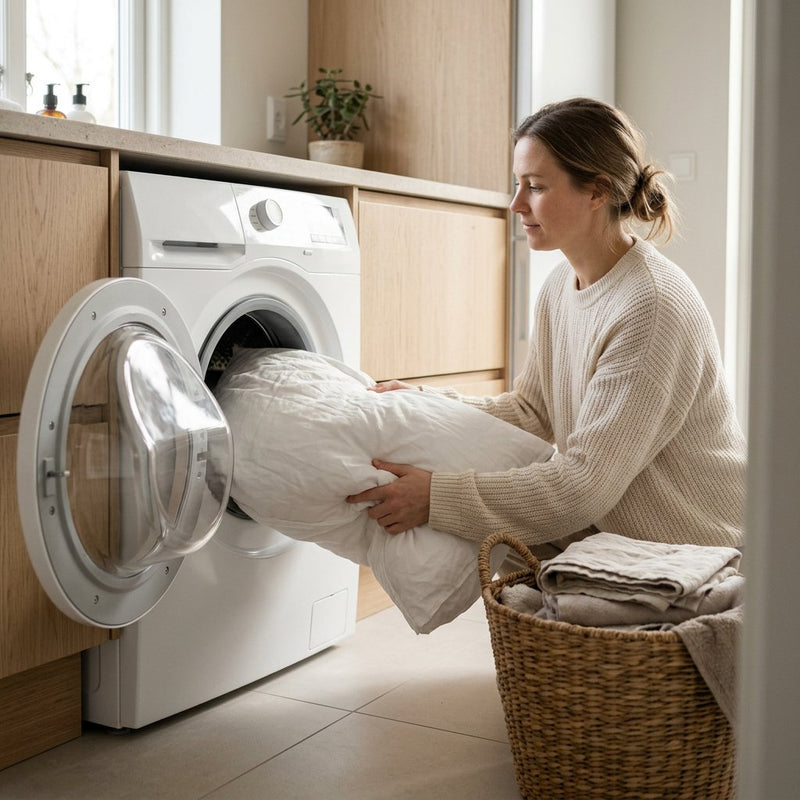
- Don’t overload the drum; this reduces unnecessary friction on the fabric.
- Choose the right size, smooth fitted sheets regularly and rotate sets so the same zones don’t wear out.
What helps if your bedding is already pilling?
- Gently remove lint with a fabric shaver or suitable depiller that matches the fabric.
- Don’t pull hard on pills and don’t use sharp blades on delicate materials.
- If the fabric is otherwise strong, pilling is often just cosmetic; if you see thin spots or holes, it’s best to replace the sheet. Browse fitted sheets
- Wash to soften, reduce friction and pay extra attention to fit and sorting.
Two more handy questions about bedding
These two questions pop up a lot when you want your bedding to stay beautiful for longer.
What’s the difference between a duvet cover and a fitted sheet?
A duvet cover goes around the duvet, while a fitted sheet hugs the mattress or topper. That means they wear differently: a fitted sheet gets most of the pressure and movement, a cover rubs more against your body and the duvet. For both, the right size and a suitable fabric help reduce shifting and extra friction.
What is a hotel closure on a duvet cover?
A hotel closure is the tuck-in flap at the open end of a duvet cover instead of buttons or a zipper. It often keeps the duvet neatly in place and makes the bed look crisper. It doesn’t do much against pilling; material, weave and daily friction matter far more.