
OEKO-TEX usually means that textiles have been tested for harmful substances against fixed criteria. For consumers this often refers to OEKO-TEX STANDARD 100, a label that mainly speaks to skin safety and chemical limits. Important to know: this does not automatically mean a product is organic or tells the whole story on sustainability. For more depth: What makes a duvet truly eco-friendly?. Below you’ll find a practical explanation of what is tested, how the product classes work and how you can verify a label number.
Where the name OEKO-TEX comes from
The name has two parts: “OEKO” refers to ecology and “TEX” to textiles. Today, OEKO-TEX is not a one-off marketing term, but the name of a well-known labeling system in the textile world. The core idea is simple: textiles are assessed for harmful substances and for suitability close to the skin.
What the label actually says about a product
When people search for what OEKO-TEX means, they usually mean OEKO-TEX STANDARD 100. That is the best known product certification within the OEKO-TEX system. The label shows that an item has been tested against defined limit values and assessed as safe for human use. It is not just about the main fabric, but the entire finished product, including relevant parts. There are multiple OEKO-TEX labels, but STANDARD 100 is usually what consumers refer to, and that is separate from questions like anti-allergy duvet vs anti-dust-mite.
What is checked before a textile gets the label
- For substances like heavy metals, formaldehyde, pesticide residues, certain azo dyes and plasticizers.
- For properties that matter for skin contact, such as a skin-friendly pH value.
- For the entire product, where yarns, coatings, prints, buttons, zippers and other components are all included.
- According to limit values that are regularly updated and often go beyond minimum legal requirements.
The four product classes explained clearly
The closer the skin contact and the more sensitive the user, the stricter the assessment.
| Product class | Examples | What it means |
|---|---|---|
| Class 1 | Baby items | The strictest requirements, meant for the most sensitive users. |
| Class 2 | Underwear, T-shirts, bedding | For products with direct and prolonged skin contact. |
| Class 3 | Jackets, coats | For textiles with little or limited skin contact. |
| Class 4 | Curtains, tablecloths, decorative textiles | For household and decorative textiles without intensive skin contact. |
How to spot a genuine, up-to-date OEKO-TEX label
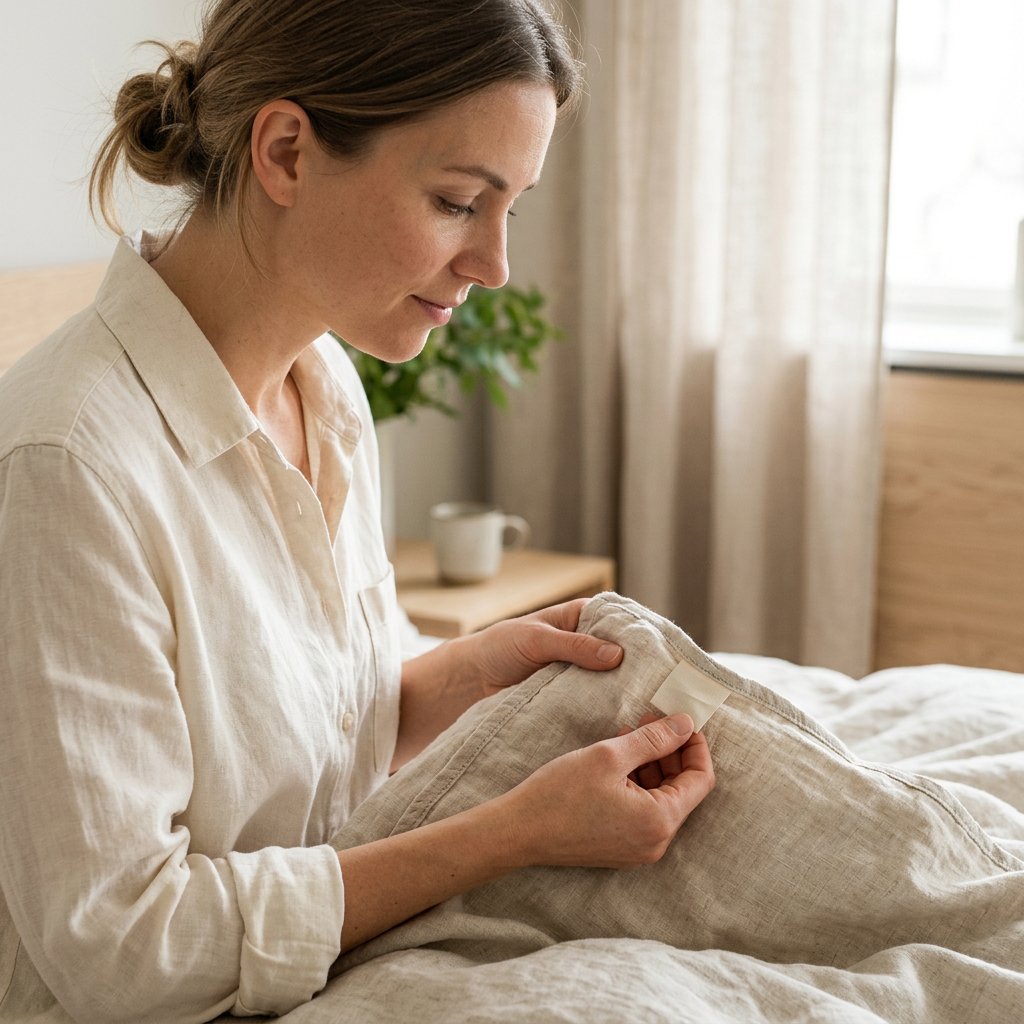
- Always verify the certificate or label number; sometimes there’s a QR code for that.
- Don’t rely on a logo alone; make sure the testing is done by a recognized, independent institute.
- Check freshness: standards and certifications are updated periodically.
- Check which OEKO-TEX label is listed, for example STANDARD 100, and don’t just look at the logo.
OEKO-TEX or GOTS: which label tells you what?
| Certification label | Main focus | What it mainly tells you |
|---|---|---|
| OEKO-TEX | Harmful substances in the textile product | Mainly answers whether a product has been tested for skin safety and threshold limits based on fixed criteria. |
| GOTS | Organic fibers plus environmental and social requirements across the supply chain | Look beyond product safety to production and raw materials. |
A product can carry only OEKO-TEX, only GOTS, or both labels. Prefer natural materials? Then check out a cotton linen duvet without a cover.
What should you look for when buying OEKO-TEX textiles?
- Choose product pages where the label type, certificate number, and material info are clearly listed.
- Pay extra attention with bed linens that touch your skin a lot, like fitted sheets, mattress protectors, pillowcases, kids’ duvets, and anti-allergy duvets.
- Don’t go by OEKO-TEX alone; it doesn’t automatically tell you everything about origin, fiber type, or overall sustainability.
Looking for extra reassurance around hygiene and health besides OEKO-TEX? Also check the Medical duvet.
How we at HappyBed look at OEKO-TEX
At HappyBed we see that questions about certifications mainly come up with bedding that sits on your skin for a long time, like fitted sheets, molton fitted sheets, pillowcases, coverless duvets, kids’ duvets, and anti allergy bedding. Especially around the pillow area, anti allergy pillow protectors can offer extra peace of mind. Since we now serve more than 100,000 European customers, we know how important clear information is. That’s why we recommend checking the material specs and the exact label for each product, instead of relying only on a logo. Not sure about skin sensitivity with a coverless duvet? Is the material of a coverless duvet soft enough for sensitive skin?
Frequently asked questions about OEKO-TEX
After the basics, a few practical questions often remain. Below you’ll find short, factual answers.
Is OEKO-TEX PFAS free?
No, an OEKO-TEX label does not automatically mean every product is completely PFAS free. The system uses up-to-date restrictions and limits for harmful substances, but the exact assessment depends on the specific standard, the product, and the version of the criteria. If you have a specific question about this, always check the most recent product specifications and certificate information.
Does OEKO-TEX only apply to clothing?
No, the label also appears on other textiles, like baby items, home textiles, and bedding. Plus, not only finished products but also components and materials within a product can be tested. This is especially relevant in the sleep category, since products in and around the bed often have direct and long-lasting contact with your skin.