
Caffeine can disturb your sleep in two ways: you fall asleep later and the sleep you do get can be lighter and less restorative. That’s why stopping caffeine at least 6 hours before bed is a good starting point for many people. If you’re sensitive to caffeine, drink larger amounts or sleep restlessly, then 5 tips to sleep better and quitting earlier are often smarter.
Watch out for hidden sources too. Caffeine isn’t just in coffee, but also in tea, cola, energy drinks, chocolate and even decaf. If you think you’re having only a little later in the day, you might still be getting enough to delay sleepiness without realizing it.
Why you feel less sleep pressure after coffee
A cup of coffee doesn’t suddenly make you less tired in a biological sense. Caffeine mostly masks fatigue. It does this by temporarily blocking adenosine, a substance that builds up during the day and creates sleep pressure. Normally that makes it clearer and clearer that your body needs rest. With caffeine that signal feels softer, so you feel more alert than you really are.
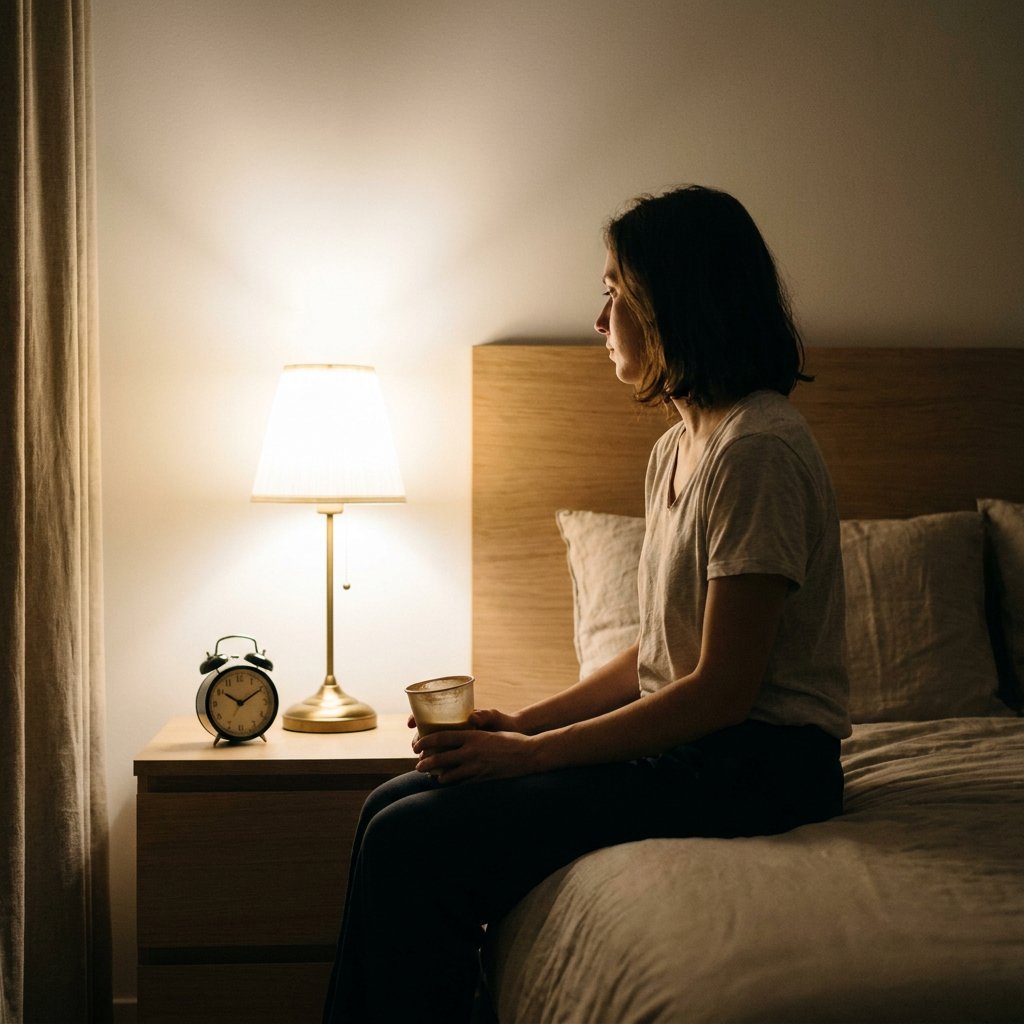
On top of that, caffeine can boost alertness and make your body more active, partly through stress hormones like adrenaline. That can make you feel tired yet still switched on. That exact mix makes falling asleep harder: your body needs rest, but your brain isn’t fully getting the signal to power down.
How long caffeine sticks around in your body
Caffeine doesn’t leave your system quickly. The half-life for many adults is roughly around five hours, which means a sizable amount is still in your body hours later. If you drink coffee in the late afternoon, it can still be noticeable by bedtime. That’s why after coffee it’s not always obvious why you feel less sleepy at night.
Multiple pick-me-ups in a day can add up. A coffee in the morning, another after lunch and later a cola or tea together mean you end up with more caffeine in your system at night than you think. How fast you break it down also varies per person, influenced by things like age, pregnancy, medication and your individual metabolism.
What caffeine does to your sleep quality
Caffeine doesn’t just affect falling asleep. It can also lower your sleep quality. Your deep, restorative sleep can shrink, so your sleep feels lighter or shorter. You might log enough hours in bed yet wake up less refreshed. Caffeine and sleep also interact through timing: if drowsiness shifts later into the evening, your natural rhythm slips out of sync more easily. Read more about your sleep cycle.
Why some sleepers feel it more than others
- Dose: a strong coffee, a big cup, or several caffeinated drinks in a day add up fast.
- Timing: for sleep, when you have it often matters more than the total milligrams.
- Sensitivity: some people feel restless at night from even small late-day amounts.
- Tolerance: even if you “always fall asleep fine,” your sleep can still be lighter or less deep.
- Metabolism: if you process caffeine more slowly, its effects can last into the evening or even the night.
Morning habits can play a role too; read more about snoozing: good or bad?.
Hidden caffeine: it’s not just coffee
Late-day caffeine often sneaks in from more places than just coffee. Exact amounts vary a lot by brand, serving size, and brew method, so treat these as practical ballparks to spot evening troublemakers faster.
| Source | Serving | Caffeine ballpark |
|---|---|---|
| Filter coffee | 1 cup (200–240 ml) | often 80–120 mg |
| Espresso | 1 shot (30 ml) | often 60–90 mg |
| Black or green tea | 1 mug (200–250 ml) | often 20–50 mg |
| Cola | 1 glass or can (250–330 ml) | often 20–40 mg |
| Energy drink | 1 can (250 ml) | often 80 mg |
| Chocolate | 30-50 g | often 5–25 mg |
| Decaf coffee | 1 cup | often 2–15 mg |
Those “small” sources matter most in the afternoon and evening, especially if you’re a sensitive sleeper.
Make smarter picks later in the day
Better sleep usually isn’t won in the middle of the night, but earlier in the day with your last caffeine choice. That’s why a personal cutoff often works better than a single rule for everyone. So don’t just look at how much you drink, but especially at when. It also helps to switch later in the day to evening-friendly drinks without caffeine and without a big sugar spike, paired with relaxation tips for a calming night. If you hit an afternoon slump, a short nap can help; discover the ideal power nap length.
How many hours before bed should you stop caffeine?
For many people, at least 6 hours before bed is a good starting point. But that’s not a hard rule for everyone. If you’re sensitive to caffeine, take a high dose later in the day, or metabolize caffeine slowly, stopping after lunch often works better. The easiest approach is to test for a few days or weeks with a simple sleep and coffee journal: note what you drank, when, and how you slept. That way you’ll discover your personal cutoff faster. Unsure about how much sleep adults need? Align your cutoff with that.
What do you prefer to drink before bedtime?
- Water, if you’re simply thirsty.
- Herbal tea without caffeine, if that works well for you.
- A warm drink without caffeine and without much sugar, if that helps you relax.
- Keep the total amount modest so you don’t wake up just to go to the bathroom.
What can you do if caffeine is keeping you awake?
- Don’t try to “force” caffeine out of your system; your body mainly needs time to break it down.
- Avoid bright screens, extra work triggers, and new caffeine. Choose something calm until your sleep pressure returns.
- Drink some water if you’re thirsty and jot down the time and amount to set a better cutoff next time.
- Make your bedroom dark and cozy. A sleep mask, a weighted blanket for stress and anxiety, or fresh, easy-to-wash bedding can be nice, but they won’t neutralize caffeine.