
The best memory foam pillow isn’t automatically the priciest or firmest model. The right pillow keeps your head and neck aligned, matches your sleep position, and stays comfy all night. That’s why a pillow that’s perfect for someone else can feel too tall, too warm, or too firm for you. Exploring options? Check the full range of memory foam pillows.
Unsure between an ergonomic shape, a classic memory foam pillow, or an adjustable option with shredded foam? Focus on fit, height, airflow, and care. With the points below, you’ll choose with confidence and avoid a bad buy. Want to fine-tune height and firmness yourself? Take a look at our adjustable pillows.
Why fit matters more than just the material
Memory foam, also called viscoelastic foam, responds to pressure and warmth. It molds to the contours of your head and neck and spreads pressure more evenly than many traditional pillows. That can be extra comfy if you often feel pressure on your shoulders, the back of your head, or neck.
But the material alone doesn’t decide which pillow is best. The real win is the combo of shape, height, and firmness. A good memory foam pillow supports your neck without pushing your head too far forward or to the side. That balance is what determines whether you truly relax or keep waking up restless.
Which shape fits your sleep position?
For side sleepers
Side sleepers usually do best with a slightly higher pillow for side sleepers that fills the space between your head, neck, and mattress. This keeps your cervical spine straighter so your head doesn’t tilt. Broad shoulders or a firm mattress often call for more height. On a softer mattress your shoulder sinks in deeper, so a lower model can fit better.
Need more help with this position? Read the guide to the best pillow for side sleepers.
For back sleepers
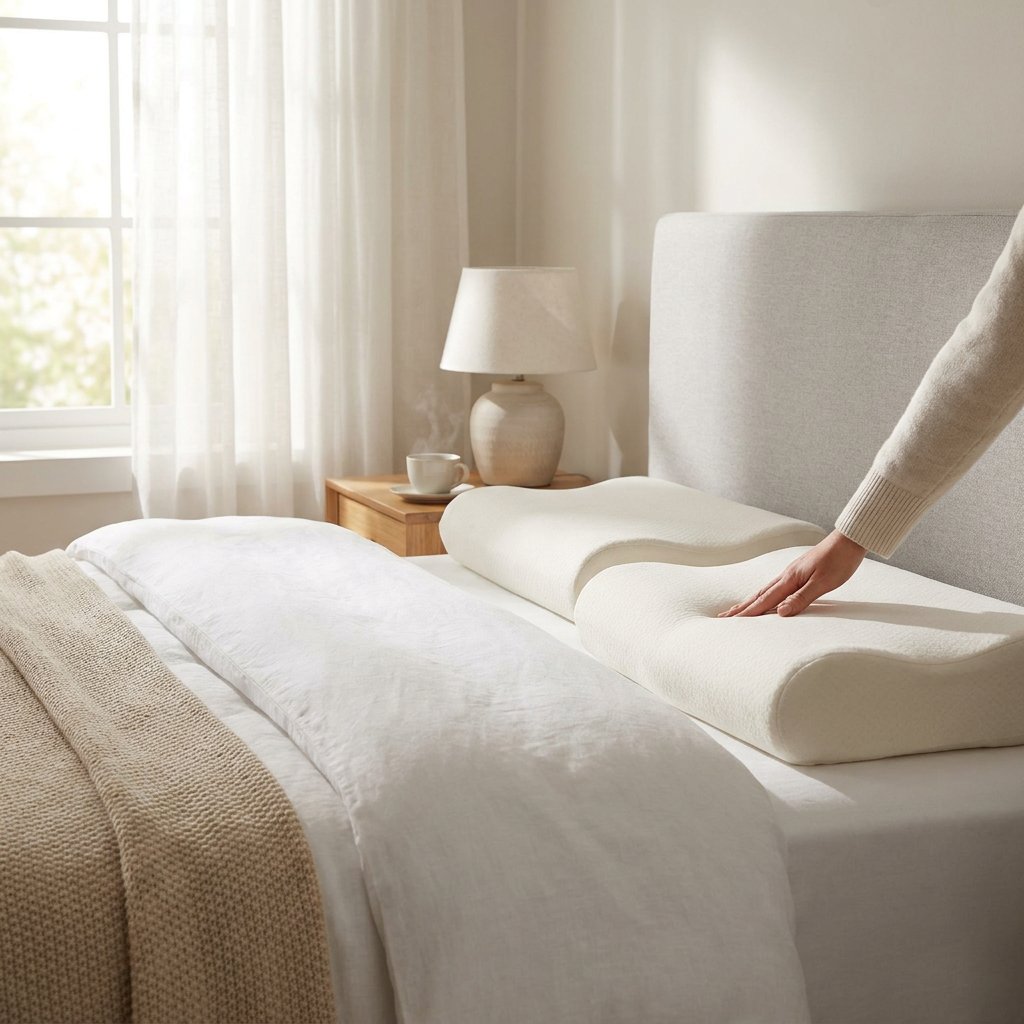
Back sleepers are usually most comfortable on a medium-height pillow with clear neck support. An ergonomic or orthopedic memory foam pillow can work well, since it lightly cradles the neck while the head rests a bit lower. If the pillow is too tall, your chin tilts toward your chest. If it’s too low, you’ll miss support in the neck curve.
For stomach sleepers or combination sleepers
If you often sleep on your stomach, a thick memory foam pillow is usually less suitable. Your neck will rotate too far to the side. Choose a low and soft model, or consider a different pillow type if you spend the whole night on your stomach. Combo sleepers often do well with a medium-height option that doesn’t feel too firm and gives enough when you turn.
What should you look for when buying?
Height and neck support
The right height is the most important factor, especially if you’re looking for a pillow for neck pain. Consider your favorite sleep position, your shoulder width, and how soft your mattress is. A contour pillow with a neck roll gives targeted support, while a classic shape feels more neutral. The better the height fits, the more likely your neck and upper back will feel calm when you wake up.
Solid core or shredded memory foam
A solid memory foam core usually feels more stable and holds its shape well. That’s great if you want consistent support. A pillow with shredded foam is often more adjustable, since you can sometimes redistribute or remove filling. In both cases, check resilience: quality foam molds slowly but doesn’t leave a dip once pressure is gone.
Breathability and warmth
Memory foam is known for running warm, but modern models breathe better than they used to. Look for an open-cell structure, air channels, perforations, or a breathable cover. If you sleep hot, pay extra attention to these features. Terms like cooling or gel-infused sound appealing but only mean something if the pillow is clearly designed for airflow. In that case, consider a cooling pillow for better temperature control.
Cover, hygiene, and care
A removable, washable cover is practical and keeps your pillow fresher for longer. Always check the care label and don’t assume the whole core can go in the washing machine. With many memory foam pillows, only the outer cover is washable and the foam core should not go in the machine unless the manufacturer explicitly says so. Regular airing and a clean pillowcase also make a big difference.
Can a memory foam pillow help with neck pain?
A memory foam pillow can feel great if you often wake up with a stiff or tired neck, because it helps distribute pressure and can support the neck more evenly. That doesn’t mean every memory foam pillow is automatically good for aches. The wrong height or shape can actually create tension in your neck, shoulders, and upper back.
If you often wake with pain, numbness in the shoulder, or headaches that start in the neck, first check whether your pillow keeps your head level in your usual sleep position. If the issues persist, it’s wise to seek professional advice. See a pillow as support for comfy sleep, not as a medical fix.
When is it time to replace your pillow?
A memory foam pillow typically lasts about 2 to 3 years, depending on quality, use, and care. If you notice it doesn’t bounce back as well, shows permanent indentations, or gives clearly less support, it’s probably time to replace it. If your posture has changed or you’ve swapped mattresses, a pillow that used to work can suddenly feel off.
To extend its lifespan, air your pillow regularly and clean the cover according to the care label. A fresh pillow not only feels better but also keeps performing longer.
Frequently asked questions about memory foam pillows
What’s the difference between memory foam and viscoelastic foam?
In practice there’s usually no difference. Memory foam is simply the common English name for viscoelastic foam. Both terms refer to foam that responds to pressure and heat and temporarily molds to your head and neck for more targeted support.
What is the best memory foam pillow?
The best memory foam pillow is the one that matches your sleep position, shoulder width, mattress, and your firmness preference. There’s no one-size-fits-all winner. Focus on the right height, proper neck support, good ventilation, and a cover that’s easy to keep clean.
Which pillows are often a good choice for neck and back issues?
Pillows that support the neck well and keep your spine as straight as possible are usually the most comfortable. For many side and back sleepers, an ergonomic memory foam pillow works well. Fit is still decisive, because lying too high or too low can make symptoms worse.
Do memory foam pillows sleep warm?
They can, but it varies a lot by model. Older or less breathable pillows can feel warmer. Newer options with open structures, ventilation channels, or breathable covers release heat better. If you sleep hot, choose one of those models and avoid vague marketing claims without clear specs.
How do you know at home if a pillow really suits you?
During the first nights, watch for three signs: your head stays level, your shoulder doesn’t feel pinched, and you don’t wake up with extra tension in your neck or upper back. A short adjustment period is normal, but persistent pressure or stiffness usually means the height or shape isn’t right for you.
When comparing models online, focus less on fancy product names and more on measurable features like height, shape, airflow, and care. That way you choose not just more comfortably, but also more smartly. And for a healthier sleep climate, it always helps to keep your pillowcase and other bedding fresh and easy to wash.