
For most bedrooms a relative humidity between 40 and 60% is a comfortable and healthy guideline. Around 35% the air is often too dry. If you’re heading toward 70 or 80% there’s usually too much moisture. Both extremes can affect your sleep comfort and your airways, and if the room is too humid you might also consider questions like anti-allergy duvet vs anti-dust-mite. Below you’ll find how to interpret these values, how to measure them and which practical step to take next.
Which value is healthy, and when do you need to act?
Treat the measured value mainly as a practical signal:
| Value | Meaning in the bedroom | Logical next step |
|---|---|---|
| 30-35% | Very dry; common in winter or with lots of heating. | Add moisture and ventilate smartly. |
| 40-60% | The best humidity for most bedrooms. | Keep it stable and check occasionally. |
| 60-70% | On the high side, especially if this is structural. | Check ventilation and moisture sources. |
| 70-80% | Too humid; chance of clammy air, condensation and a musty smell. | Actively lower it and find the cause. |
| 80% or higher | Clearly too high; the risk of mold growth increases. | Investigate a moisture problem seriously. |
Season, home type and heating always color the reading, but normal bedroom humidity usually stays in the same range. In practice that also applies to adult bedrooms and kids’ rooms.
How to measure reliably without guesswork
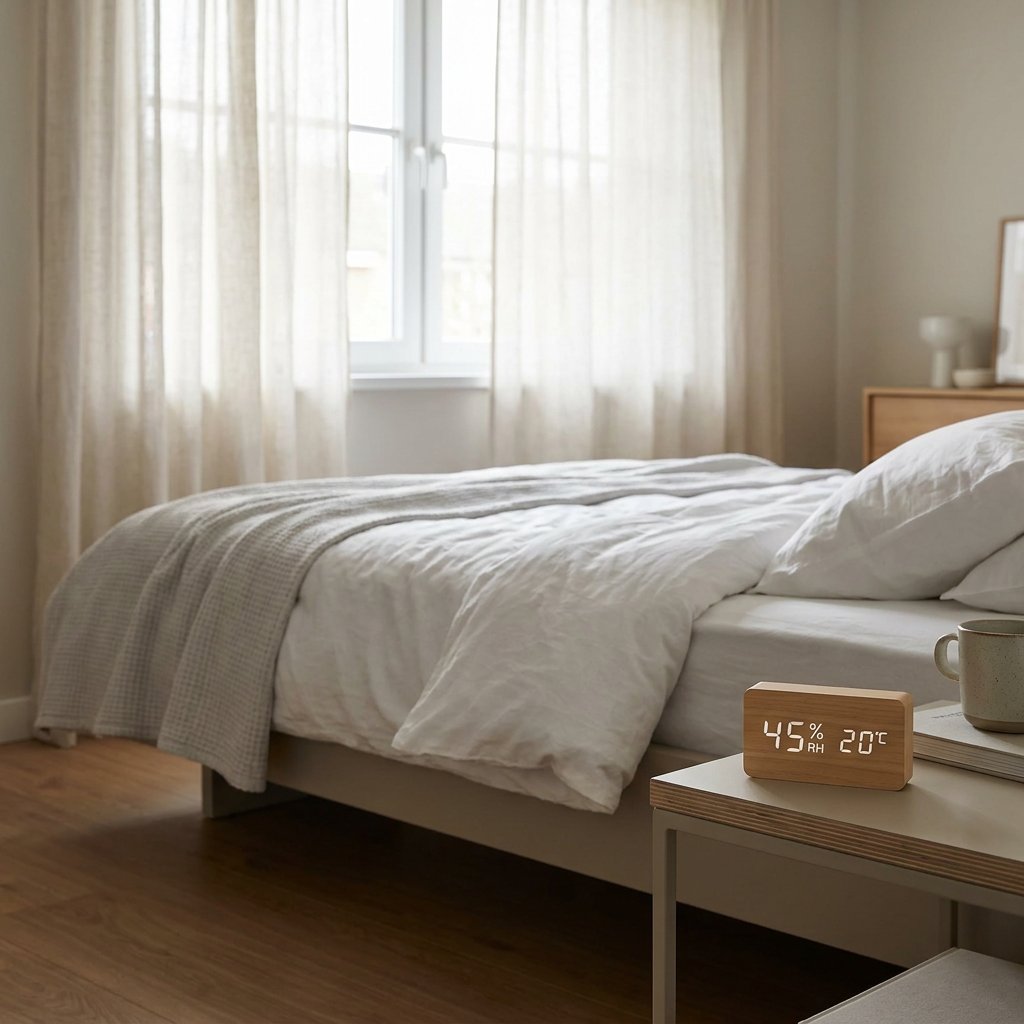
If you’re unsure about your home’s moisture level, use a hygrometer. Relying only on how the room feels is often misleading.
- Place the meter in a normal spot in the bedroom, not right next to a radiator, open window or damp outside wall.
- Measure at multiple times: during the day, right before bed and after the night. That way you’ll see if bedroom humidity fluctuates.
- Compare summer and winter. The bedroom humidity level in a heated winter room is often very different from a warm summer period.
- Always read the value in context: ventilation, location, insulation and the type of home all affect the result.
- Also take measurements in other rooms. That helps you spot whether it’s a bedroom humidity issue or a home-wide trend.
Too humid in the bedroom? Tackle it step by step
You’ll often notice high humidity in the bedroom from clammy air, fogged-up windows, condensation on cold surfaces and a musty smell. If humidity consistently stays above about 60%, that’s usually not a coincidence anymore. At 70% or 80% sleep often feels more stuffy and less fresh, which makes sleeping well when it’s warm at home harder, while the room also becomes more prone to mold growth. That’s not great for your sleep comfort and can further irritate any sensitivity to humid air or mold. Extra tip: a cooling fitted sheet can help on muggy, humid nights; read when it really makes sense.
Start by ventilating at the right time. Short, powerful airing usually works better than cracking a window for hours. In winter that often helps quickly, because cold outdoor air becomes relatively drier once it warms up. In summer it’s smarter to ventilate early in the morning or later in the evening, when the outside air feels less heavy and humid. Also check simple causes: are you drying laundry in the bedroom, are ventilation grilles closed or is the door always shut tight?
If humid air in the bedroom keeps coming back, a dehumidifier can be a lifesaver. Some air conditioners also have a dehumidifying mode, which can be nice in warm, muggy weather. If you also spot mold patches, humidity stays high in multiple rooms or you often measure well above 70%, that can point to a broader moisture problem in the home rather than just the bedroom itself.
Air too dry? Here’s how to make your bedroom comfortable again
Air that’s too dry in the bedroom shows up mostly in winter, when central heating pulls a lot of moisture out of indoor air. If you measure around 30 to 35%, the air is really on the dry side. You’ll often notice it as a dry throat when you wake up, tight-feeling skin, irritated mucous membranes or a headache. The room can also feel dustier, because tiny particles stay suspended in the air more easily. During cold season, that kind of dry climate usually feels extra unpleasant.
The answer isn’t to make your bedroom as humid as possible, but to ease back to a comfortable range. A humidifier can help as long as you keep it clean and don’t set it too high. Measuring still matters here too, since you want to avoid overshooting into high humidity. Ventilate smart and briefly so the air refreshes without drying the room out for hours. Plants can support how the room feels, but don’t expect a big effect. The goal is simple: get back to about 40 to 60% so sleep feels comfortable again.
Don’t forget your bed climate
A great bedroom isn’t only about the room’s air. Your bed also needs to release heat and moisture well, especially if you’re looking for a solution for people who sweat a lot at night. Read when a coverless comforter for night sweats is a good fit. A breathable comforter, the right pillow, and a molton or mattress protector that absorbs moisture and lets it escape help keep your sleep comfort more stable. During the day, let your bed air out instead of sealing it up right away, so trapped moisture can dissipate.
That’s why, besides getting the humidity right, it’s smart to look at your bedding too. Think about a cooling comforter or an all-season comforter, a comfy pillow with a cooling pillowcase, and a molton mattress protector that supports a healthy bed climate. At HappyBed you’ll find these products to round out a cozy bedroom, though they won’t fix a structural issue with air that’s too dry or too humid.