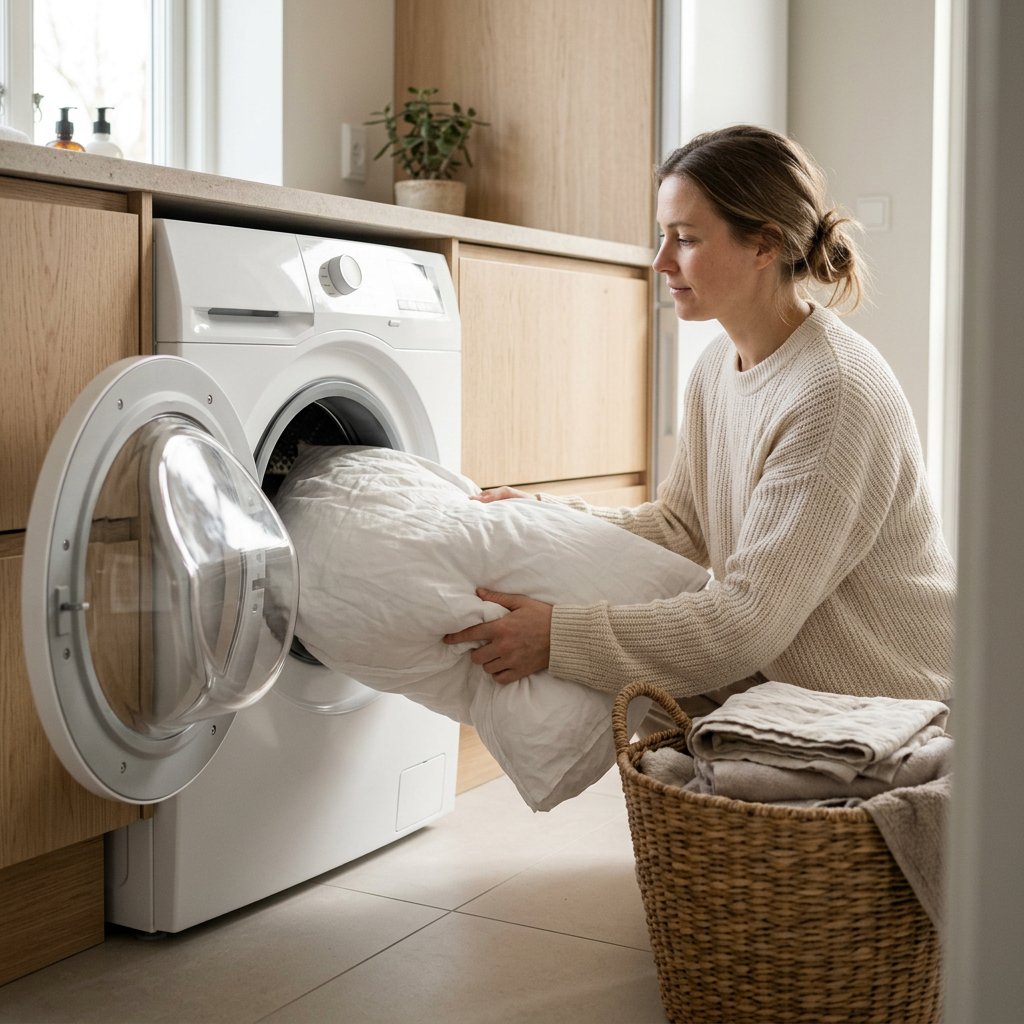

You can often wash a pillow at home, but only if the filling, the ticking and the care label allow it. Synthetic pillows and many down or feather pillows are usually fine in the washing machine. For other fillings like memory foam and latex that’s often the exception, since usually only the removable cover is washable.
The safest baseline is simple: use a small amount of liquid detergent, choose a gentle cycle and only put the pillow back on the bed once the core is completely dry. Below you’ll see what’s smart for each material, how to deal with yellow stains, how to dry with or without a dryer, and when replacing is smarter than another wash.
Quick check first: what type of filling does your pillow have?
Looking for care advice for a Tempur, Emma, Silvana, Auping, Cloudpillo or IKEA pillow? Start with the care label. Brand and model names tell you less than the combo of filling, cover and construction, since one brand can have multiple care routes.
| Type of filling | In the washing machine? | Safe washing | Drying |
|---|---|---|---|
| Synthetic / cluster fiber filling | Usually yes, according to the label | Often 40-60°C, gentle cycle, little liquid detergent | Low heat in the dryer or air dry thoroughly |
| Down / feathers | Often yes, if the label allows it | Usually 30-40°C, delicate or wool cycle, use sparingly | Dry gently, fluff in between to reduce clumping |
| Bamboo fiber or bamboo cover | Often yes, but the core may vary | Usually 30-40°C, gentle cycle as per label | Low heat or air dry, not too hot |
| Kapok | Often preferably not fully | Only wash if the label explicitly says so | Dry very thoroughly; filling can clump |
| Buckwheat | Usually no | Often only wash the removable cover; keep the filling dry | Keep the filling dry, dry the cover separately |
| Memory foam / viscoelastic foam / latex | Usually no | Not in the washing machine and usually not for soaking either; often only the cover is washable | Air only after spot cleaning |
How to wash a pillow step by step
Does the care label allow machine washing? Then keep it calm and simple:
- First remove the pillowcase and any removable cover. Check the label, make sure the seams are intact, and pre-treat visible stains. A zippered pillowcase makes it extra easy to take off and put back on.
- Preferably wash two pillows at once, or balance the drum another way. That helps keep the filling more evenly distributed.
- Use a small amount of liquid detergent or choose mild laundry strips. Too much soap sinks into the filling and is harder to rinse out.
- Choose a gentle cycle, like delicates or synthetics, at the temperature shown on the label. Avoid fabric softener.
- If your machine has it, switch on an extra rinse. A second spin cycle also helps remove more moisture from the pillow.
- Don’t put a pillow with damaged seams straight into the machine. You risk loose filling and a lumpy pillow.
Yellow stains? Tackle the cause first
A yellow pillow usually doesn’t turn yellow from a single mishap. Discoloration often builds up gradually from sweat, skin oils, saliva, and moisture that soak into the cover and fill and then oxidize.
- Start with a pre-treatment. For a white, washable pillow, a little mild liquid detergent on the stain often works well. If the material allows, you can add some baking soda or an oxygen bleach.
- Dealing with blood? Use cold water instead of warm. Heat can set these stains deeper into the fabric.
- For sweat and saliva stains, gentle is better than vigorous scrubbing. Blot, let it sit briefly, then wash according to the label.
- Vinegar can help with odor and detergent residue, but it won’t magically make a deeply yellowed pillow bright white again. So don’t expect miracles.
- Avoid chlorine bleach on a whim. It can damage fabrics and fills. Never mix chlorine with vinegar or ammonia.
- If the smell lingers, yellowing returns quickly, or you see stubborn stains deep in the core, replacing is often wiser than washing again.
Drying well makes all the difference
After washing, the outside isn’t the best gauge. A pillow can feel dry while the core is still damp.
- If the pillow can go in the dryer, choose low heat and add dryer balls or clean tennis balls to keep down or synthetic fill loftier.
- Take the pillow out of the dryer now and then to fluff it and check if there’s still moisture in the core.
- Without a dryer, dry the pillow flat or in a well-ventilated spot, turning and fluffing it regularly.
- Never use or store a half-dry pillow. It increases the risk of mold, musty odors, bacterial growth, and clumping fill.
How often is washing enough?
Not every part of your bedding needs washing equally often. This basic schedule works for most bedrooms:
| Part | Practical frequency | Note |
|---|---|---|
| Pillowcase | Weekly | More often if you sweat a lot, in warm weather, or when you’re ill |
| Extra cover or protector | Every 1 to 2 weeks | Helps catch sweat and skin oils before they reach the core |
| The pillow itself | Every few months | Always follow the label; with memory foam and latex you often only wash the cover |
How to keep your pillow fresher between washes
The less moisture and dirt penetrate the core, the longer your pillow will feel good. As explained in pillow protector vs pillowcase: when do you use which?, it mainly comes down to that extra protective layer.
- Give your pillow a quick daily fluff. It helps release moisture and keeps the filling loftier.
- Let it air out regularly, for example during the day without a duvet on top. Fresh air is usually safer than leaving a pillow damp for a long time.
- Always use a clean pillowcase, and preferably an anti allergy pillowcase. It catches sweat and skin oils first, so the pillow core yellows less quickly.
- Try not to go to bed with wet hair. That extra moisture goes straight into the fabric and filling.
- Tackle small stains right away with a gentle spot treatment. The longer you wait, the bigger the chance of lasting rings and odor.
- Avoid using harsh products to “freshen up” a pillow in a rush. Regular airing and timely washing by the label usually work better.
When a new pillow is smarter than yet another wash
A pillow typically lasts around two to three years, but the calendar isn’t the only thing that matters. Support, shape, and hygiene are more important than exact age. Do you notice lumps, sagging fill, cracks in foam, a lingering odor, or discoloration that quickly returns? Then your pillow is probably done.
When you choose a new pillow, start with your sleep position and the support you need, especially if you’re looking for a pillow for neck pain. Then check practical details like a removable cover, a clear care label, and materials you can maintain at home.
How we at HappyBed look at pillow care and convenience
At HappyBed we’ve noticed that easy care matters just as much as comfort for a lot of people. With OEKO-TEX and ISO certified materials and now over 100,000 customers across Europe, we keep seeing the same thing: a fresh bed doesn’t start with harsh cleaning, it starts with smart, doable care.
That’s why with bedding like pillows and pillowcases we focus on clear care instructions and washable layers around the pillow. The practical takeaway is simple: pick a pillow that suits your sleep and that you can realistically air out, protect, and wash according to the label.