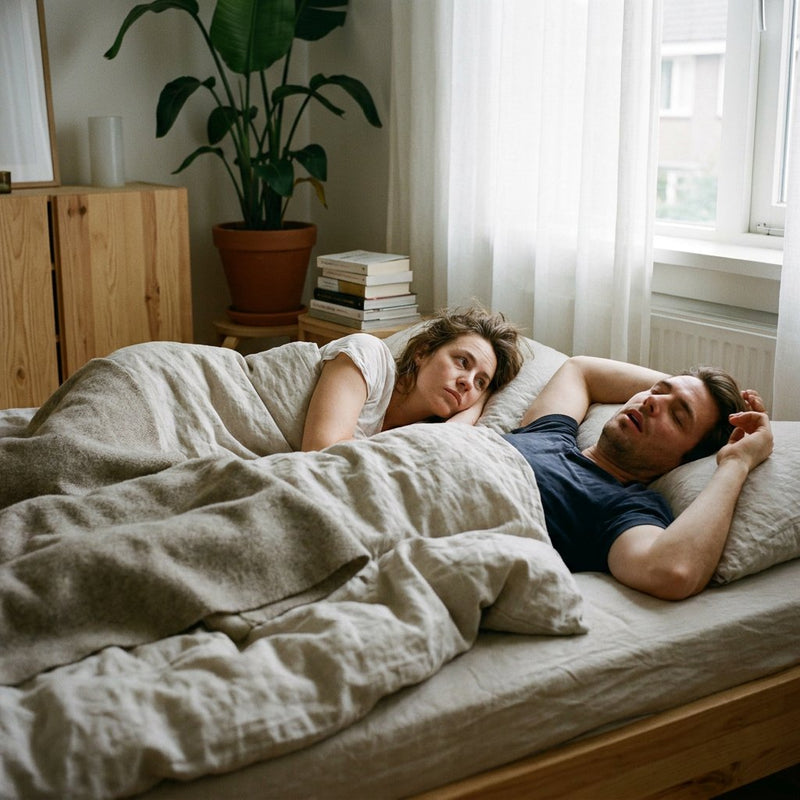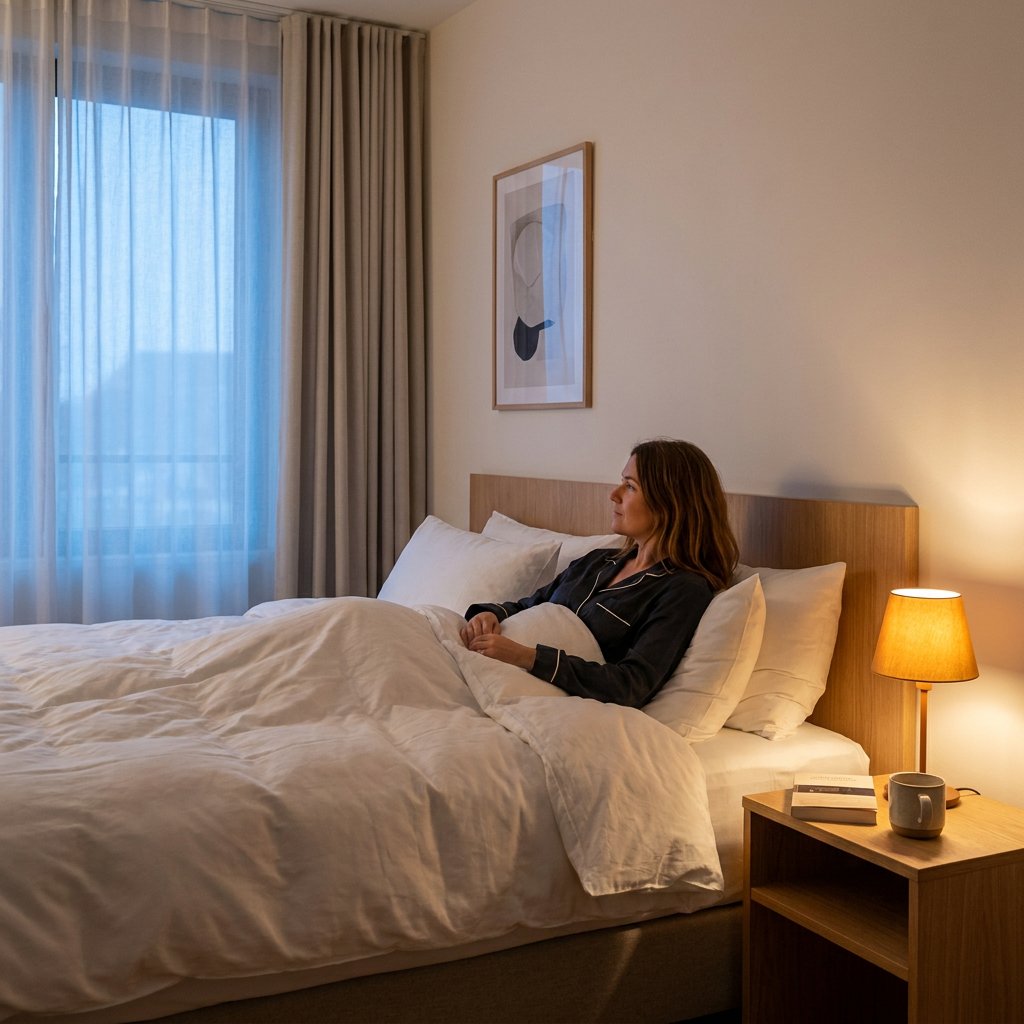

Sleeping badly in a hotel, holiday home, at someone’s place or with a new partner is totally normal. Many people notice during the first night that they sleep lighter, wake up more often or find it harder to fall asleep. That’s also called the first night effect. Your body wants to sleep, but your brain stays a bit more alert in an unfamiliar setting.
It’s not just about a different mattress or pillow. Sound, light, scent, temperature and a changed evening routine also play a part. Luckily, you can often do something about that with 5 tips to beat bad sleep. Below you’ll read why this happens and what helps before bedtime, in the room itself and if you’re still awake.
What happens in your brain during the first night
The first night effect is the well-known reaction where your first night in a new place feels more restless than usual. You might be tired enough to sleep, yet your sleep feels lighter and you wake up more easily. That’s because part of your brain stays extra alert in an unfamiliar environment for signals like sounds, movement or changes in the room.
That extra alertness probably has a protective role. Your brain basically wants to check first whether this new place is safe and predictable. Annoying when you want to sleep through the night, but not strange in itself. It’s usually temporary too. Once the environment feels more familiar, that vigilance often fades and you sleep more soundly.
Why a new sleep environment keeps you awake more easily
So when you sleep in a strange bed, it’s rarely just the bed itself. Often several triggers stack up:
- Unfamiliar sounds, like an elevator, traffic, air conditioning, slamming doors or someone walking down the hall.
- Different smells, more or less light and a temperature that’s warmer or colder than you’re used to at home.
- A disrupted routine from travel, eating later, alcohol, screen time or nerves about the next day.
- A different mattress, a higher or flatter pillow, or movement from a partner who sleeps differently than you do.
- The first night effect itself is normal; you can often influence triggers like noise, light, warmth and late stimulation.
Before bedtime: make the room feel familiar faster
- Bring something familiar, like your own pillowcase, a known scent or, if it’s practical, your own pillow.
- Whenever you can, pick a quiet room, preferably not next to the elevator, on a busy street or near other noisy spots.
- Right away, check whether the room can be darkened properly and whether you can still adjust the temperature before you get really sleepy, especially in warm weather.
- Stick to your usual evening routine as much as possible: around the same time, a calm wind-down, and don’t suddenly go to bed much later.
- Know that getting used to it helps too. People who sleep in new places more often usually find the first-night effect gets less intense.
Make the room sleep-friendly in five minutes
You don’t need to make an unfamiliar room perfect. A few quick tweaks often reduce enough stimuli to make it easier to fall asleep.
| Stimulus | What you can do right away | When you can change more |
|---|---|---|
| Sound | Use earplugs, close windows, and switch off noisy devices if you can. | If hallway, street, or neighbor noise continues, report it or ask for a quieter room. |
| Light | Turn off bright lights, cover indicator lights, and use a sleep mask if the room isn’t dark enough. | If you can’t get the room dark enough, see if the curtains can close better or ask the accommodation for another solution. |
| Temperature | Make the room a bit cooler, air it out briefly, and remove a layer if you’re too warm. | If the climate control isn’t working well, report it instead of putting up with it all night. |
| Phone | Turn off notifications, switch on do not disturb, and keep your phone out of sight and away from your head. | If needed, use a regular alarm and avoid late scrolling if you notice it keeps you awake. |
| Food and drinks | It’s better to skip a heavy meal, lots of alcohol, or late-evening caffeine. | If you’re still a bit hungry, keep it light and calm so your body doesn’t get extra activated before sleep. |
| Privacy and comfort | Hang a do-not-disturb sign, fix your pillow, and make the bed as calm as possible. | If the pillow or the room is really uncomfortable, feel free to ask for an extra pillow, blanket, or a different room. |
Do you mainly notice a lot of noise in and around your room? Then read these practical tips on sleeping with noise disturbances.
Think of this as a quick sleep check: fewer stimuli, more predictability, and as little activation as possible right before bedtime.
Still awake? This works better than tossing and turning
Forcing sleep usually backfires. The harder you try to fall asleep, the more tension you build up in bed. If you’ve been awake for a while, get up and do something calm in low light, like reading or gentle breathing, without any screens.
Turn your clock away too, so you don’t keep calculating how much sleep you have left. Yes, 3 hours of sleep is better than none, and a short or broken night is annoying but not immediately harmful. Lying still and relaxing is often better than fighting sleep. If restlessness or rumination plays a big role, check out these tips on worrying before bed.
When it’s not just about an unfamiliar bed
If poor sleep doesn’t just happen when traveling or staying over but also shows up at home or lasts for weeks, there may be more going on than a new environment. Signs include trouble falling asleep, waking up often, waking too early, daytime sleepiness or fatigue, and growing worries about sleep.
Sleeping a lot isn’t the same as sleeping well. Even after 12 hours in bed you can still feel tired if your sleep was restless or not very restorative. If you notice this keeps happening, track your sleep pattern and discuss your symptoms with your doctor.
Two more frequently asked sleep questions
Not every sleep rule you read online is truly decisive. In the end, comfort, fewer distractions, and a calm routine usually make the biggest difference.
Why not sleep on your right side?
There isn’t a universal sleep rule that says everyone should avoid sleeping on their right side. The position that feels best mostly depends on your comfort and sometimes on personal issues like reflux, pregnancy, or neck and shoulder pain. In an unfamiliar bed it’s usually smarter to stick with your usual sleep position than suddenly try something new. Focus on good support for your neck and shoulders with a pillow that suits you, so your body doesn’t have to keep searching for a relaxed position.
Why shouldn’t you sleep with your feet toward the door?
That idea mainly comes from cultural or spiritual beliefs, not sleep science. There’s no evidence that sleeping with your feet toward the door by itself harms your sleep. What does make a proven difference are things like darkness, quiet, a comfortable temperature, and solid support, for example with adjustable pillows. If a certain setup makes you feel uneasy, feel free to face another direction. Not because you have to, but because feeling calm in an unfamiliar room simply helps you drift off more easily.