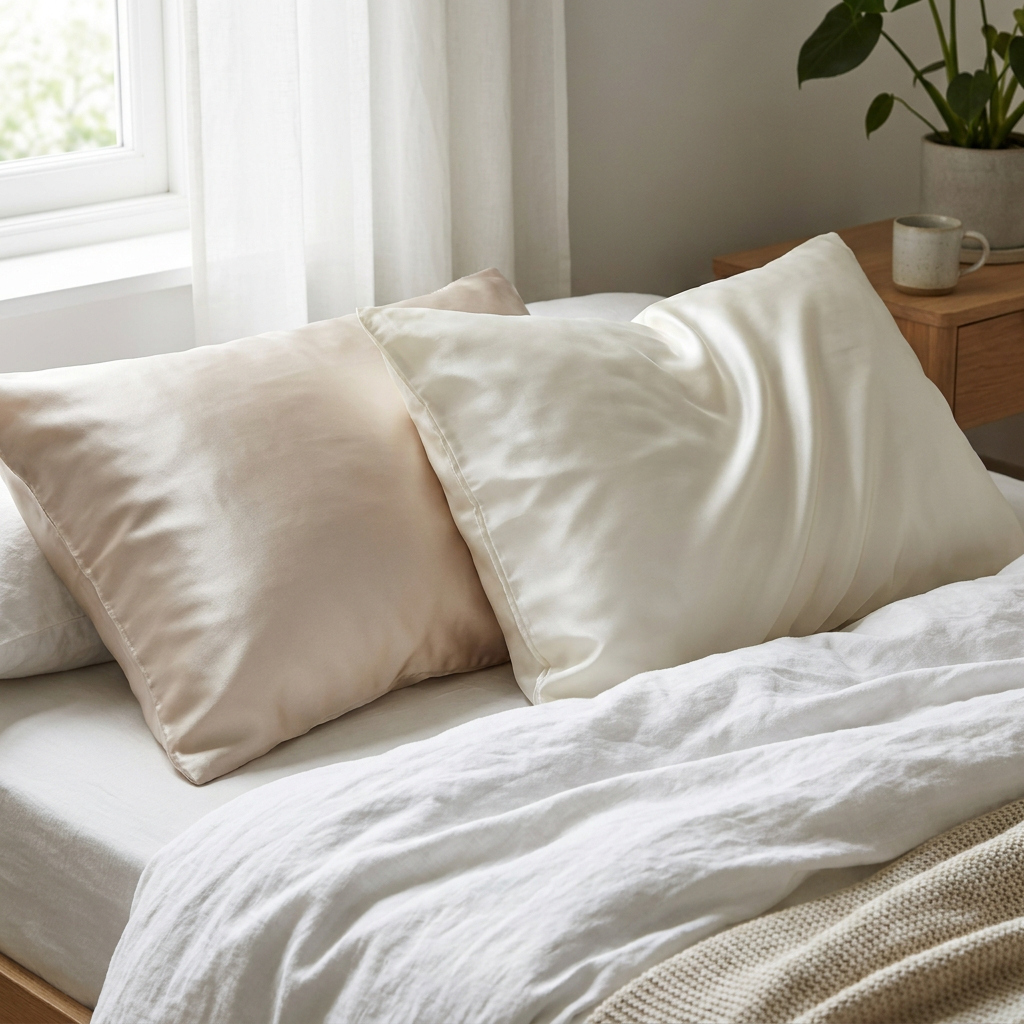

Shopping for a sateen pillowcase to reduce frizz, cut down on tangles or just get a smoother sleep surface? Then it helps to know one key difference first: sateen isn’t a material, it’s a weave. That’s why a sateen pillowcase can be made from cotton, polyester or even silk. That combo is what really decides how soft, breathable and low maintenance the pillowcase is in everyday life. Below you’ll find which type suits your hair, skin and sleep comfort best. Want the quick overview? Explore all pillowcases.
When is a sateen pillowcase the smartest choice?
A sateen pillowcase is especially appealing if you want a smoother fabric than standard cotton. Thanks to the slick outer surface, hair glides more easily across the pillow and the fabric often feels softer on your skin. That can be great for curls, long hair, sensitive skin, or if you wake up with pronounced sleep creases. For everyday use, cotton sateen is often the most practical choice because it blends a luxe feel with good breathability and relatively easy care.
What exactly is a sateen pillowcase?
With a sateen pillowcase, it’s all about the sateen weave. This weave creates a fluid surface, a subtle sheen and a smoother feel than many standard woven fabrics. It also means the product description needs to say more than just the word sateen. A cotton sateen pillowcase, for example, is cotton with a sateen weave, while polyester sateen is fully synthetic. There are also silk pillowcases with a satin like finish. If you see “100% sateen” anywhere, always check the label for the actual fiber.
Sateen or silk pillowcase: what’s the practical difference?
If you’re torn between a sateen pillowcase and a silk pillowcase, the real differences come down to material, care and price. Silk is a natural fiber. Sateen is a weave. That means they’re not directly comparable one to one.
| Section | Sateen pillowcase | Silk pillowcase |
|---|---|---|
| What is it? | A pillowcase with a sateen weave, often cotton or polyester | A pillowcase made of silk fiber |
| Feel | Smooth, supple and slightly shiny | Ultra smooth, light and luxe |
| Care | Usually easier, especially cotton sateen | Often more delicate, wash with care |
| Breathability | Depends on the material, cotton sateen usually breathes well | Naturally comfy and airy |
| Price | Often more budget friendly | Usually pricier |
| Pairs well with | Everyday use, zero fuss | If you want luxury and don’t mind a little extra care |
Cotton satin or polyester satin?
Not every satin pillowcase feels the same. Cotton satin is popular because it feels smooth yet still keeps the nice properties of cotton, like breathability and moisture absorption. Polyester satin often has a stronger sheen and is usually more affordable, but it can feel warmer and breathe less. If you’re after a pillowcase for hair, skin, and everyday sleep comfort, cotton satin is often the most balanced choice.
What can you expect from a satin pillowcase for hair and skin?
For your hair
The biggest plus for your hair is less friction while you sleep. Because hair glides more easily over a smooth surface, tangles, frizz, and bedhead are often less noticeable in the morning. That’s especially nice for curls, wavy hair, and longer hair. A satin pillowcase isn’t a miracle cure for damaged hair, but it is a practical way to make nights a little gentler on your hair.
For your skin
For skin, the benefits are mostly about comfort. A smooth pillowcase can feel softer and create less friction than a rougher fabric. Some people notice less tightness and fewer visible sleep creases. It’s good to stay realistic though: a satin pillowcase won’t treat a skin concern on its own. Washing regularly is just as important as the material you sleep on.
Care and washing
How to wash a satin pillowcase depends on the fiber. Always start by checking the care label. Cotton satin is often machine washable, regularly at 40 or 60 degrees, depending on the finish and the manufacturer’s instructions. Polyester satin usually needs a lower temperature and a gentle cycle. Silk is more delicate and often needs extra care. Ideally, wash your pillowcase weekly, use a mild detergent, wash with similar colors, and avoid harsh bleaches. Dry it as indicated on the label to keep the sheen and softness for as long as possible.
What should you look for when choosing?
Material and sleep feel
Always look beyond the word satin. Check whether you’re choosing cotton satin, polyester satin, or silk. If you want comfort with easy care, cotton satin is usually the safest middle ground. Also pay attention to details like a hotel closure or a zippered pillowcase, so it stays snug around your pillow.
Common sizes
Also check the size of your pillow. Popular formats are 40x60, 50x60, 50x70 and the most common Dutch standard: pillowcase 60x70. Do you sleep on a rectangular pillow? Take a look at a silk pillowcase (40x80). A pillowcase that’s too loose or too tight feels less comfortable and often looks less neat on the bed.
Not sure which size you need? Read: Which pillowcase size fits your pillow?
Care and everyday use
If you mainly want a pillowcase that stays beautiful without a lot of extra work, pick a version with care instructions that match your routine. That fits how we at HappyBed think about sleep comfort: luxury only truly feels good when it also stays practical in daily life.
Frequently asked questions about satin pillowcases
Why is a satin pillowcase better?
It’s not automatically better for everyone, but many people prefer a satin pillowcase because of the smoother surface. That can help reduce friction for hair and skin and often feels more luxurious than standard cotton.
What’s better for your hair, silk or satin?
Both can feel smooth, but for everyday use cotton satin is often the most practical choice. Silk feels luxurious, but usually needs more delicate care and often comes with a higher price tag.
Is silk better than satin?
Not necessarily. Silk is a fiber and satin is a weave. A silk pillowcase can feel very luxurious, but a good cotton satin pillowcase can be a better choice if you value breathability, ease of use and low‑maintenance care.
What’s the difference between a silk and a satin pillowcase?
The key difference is that silk is the material and satin is the weave. A satin pillowcase can be made of cotton, polyester or silk. That’s why the fiber label ultimately tells you the most.
If you mainly want comfy sleep without extra fuss, don’t just look at the sheen or the word satin. The real difference is in the material behind it. For many sleepers, cotton satin is the most practical pick: smooth, comfortable and usually easier to care for than silk.