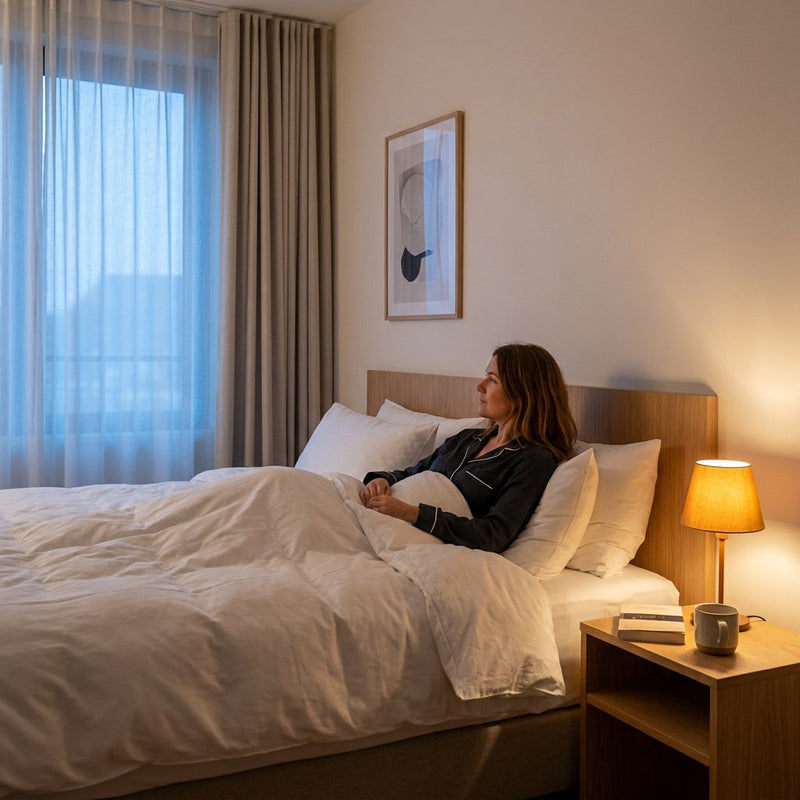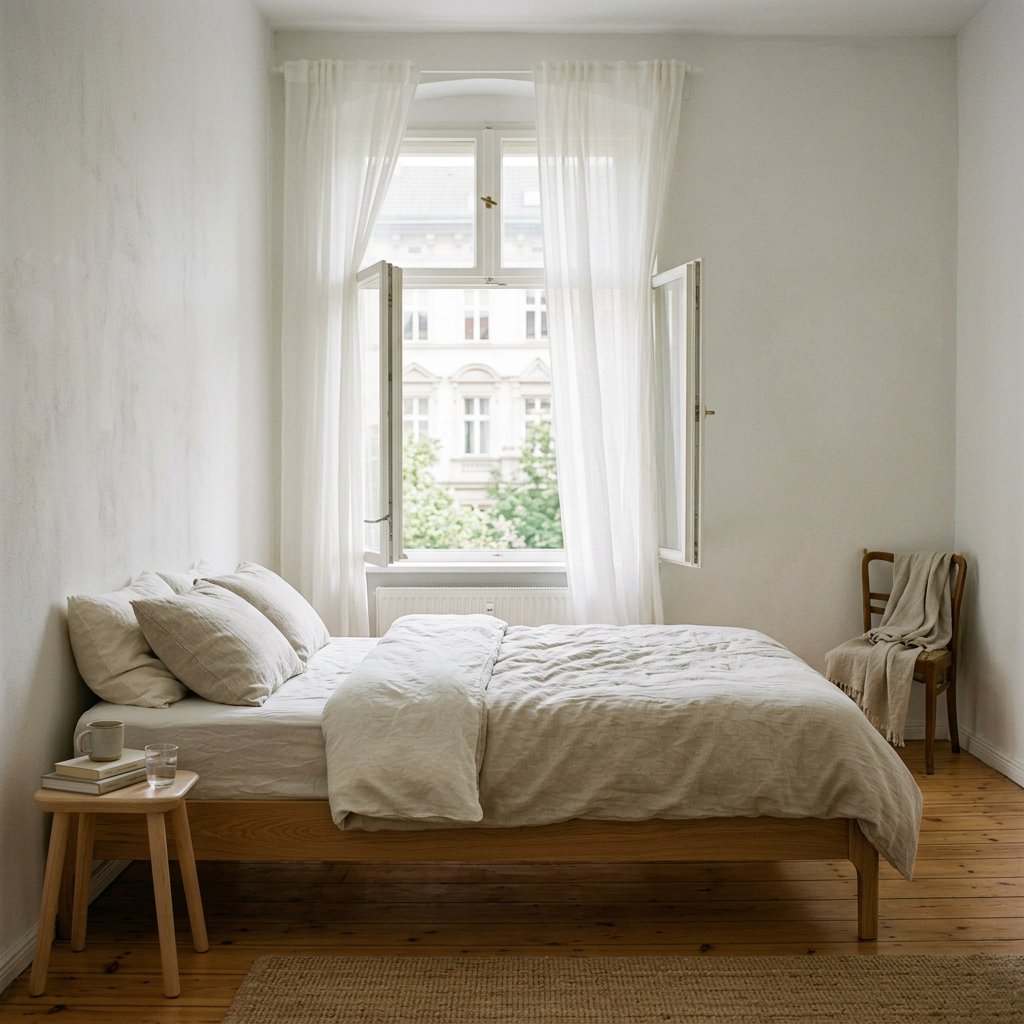

You usually can’t get house dust mites out of your bedroom completely, but you can often cut allergen levels significantly. Most of the gains come from four things: fewer dust collectors, a set washing routine for bedding, smart cleaning and keeping humidity in check. Symptoms often aren’t caused by “dust” itself, but by your reaction to mite residue and droppings. That’s why they stand out when dust gets stirred up, for example when making the bed or vacuuming.
Why house dust mites are so persistent around your bed
House dust mites feel right at home around your bed. Mattresses, pillows, duvets and other textiles are warm, dark and tend to trap moisture. That’s why allergens build up there faster. You usually don’t react to visible dust, but to mite residue. Wiping them out completely at home is rarely realistic, but reducing exposure can noticeably improve comfort and symptoms, especially while cleaning or making the bed.
Tackle the biggest dust collectors in your bedroom first
- Limit carpet, heavy curtains, decorative cushions, stuffed toys, books, plants and extra upholstery as much as possible.
- Choose smooth floors and materials you can easily wipe down or wash.
- Keep loose items to a minimum and store textiles or toys closed as much as possible.
- Choose washable stuffed toys. Non‑washable soft items can be sealed and frozen as an extra measure.
Give your mattress, pillow and bedding a set routine
- Ideally wash sheets, pillowcases and other bedding weekly, preferably at 60°C if the material allows. Consider Anti‑allergy pillowcases for an extra barrier around your face.
- Give your mattress, pillow and duvet extra attention. You lie directly on them and allergen buildup lingers there more easily. Not sure how often to wash? How often should you wash a duvet? offers clear guidelines.
- Use a well‑fitting, washable protector for your pillow or a molton fitted sheet to better shield your mattress.
- Go for washable, low‑maintenance sleep layers rather than lots of separate layers that are hard to clean.
This way you clean and ventilate without kicking up extra allergens
- Vacuum, then wipe surfaces with a damp cloth or mop, especially under the bed and around furniture.
- A vacuum with a HEPA filter or water filter is preferable to a standard model that can blow fine particles back out.
- Air out daily and keep relative humidity around 40% to 60%, ideally under 55% to 60%. You’ll find more background in Humidity in the bedroom.
- If a room stays damp, mechanical ventilation or a dehumidifier can help.
- For practical ventilation tips: Ventilating the bedroom.
How we at HappyBed think about an allergy friendly sleep climate
At HappyBed we take a practical view. A sleep product should be easy to protect, easy to wash and easy to keep up in your routine. Unsure about the terms and products? Anti‑allergy duvet vs. anti‑dust mite: what’s the difference? helps you pick the right duvet. That’s why we focus on washability, fit and breathability. In our range, for example, you’ll find anti‑allergy duvets, molton fitted sheets, moltons for toppers and zip pillowcases. Products like these support protection and upkeep, but they don’t replace washing, airing and proper cleaning. Our focus on quality aligns with our OEKO-TEX and ISO certifications.
Frequently asked questions about dust mites in the bedroom
Below you’ll find quick answers to questions that often come up after these tips.
Do dust mites bite?
No, dust mites do not normally bite people. Symptoms usually come from an allergic reaction to the mite’s droppings and other remnants. If you have itchy spots or bumps, something else could be causing them. So don’t jump too quickly to the conclusion that dust mites are to blame.
Can dust mites cause itching in bed?
Yes, dust mite allergens can trigger itching or irritation, often along with sneezing, watery eyes or a blocked nose. Many people notice stronger symptoms when allergens get stirred up, for example when making the bed or vacuuming. If the itching continues or your skin reaction is severe, have it assessed by a medical professional.
Which bed is better for a dust mite allergy?
No single bed type is decisive. What matters more is whether you can easily clean around your mattress, topper and bedding, and whether protective layers fit well. Ideally choose as few dust catchers as possible and enough space under and around the bed. Washable sleep textiles usually make more difference than the bed frame itself.
Which pills can you use for a dust mite allergy?
Concrete medication advice belongs with a doctor or pharmacist, because it depends on your symptoms and personal situation. Medicines mainly relieve symptoms, while bedroom measures reduce exposure to allergens. If your symptoms keep coming back or are severe, make an appointment with your GP for tailored advice and possibly further tests.