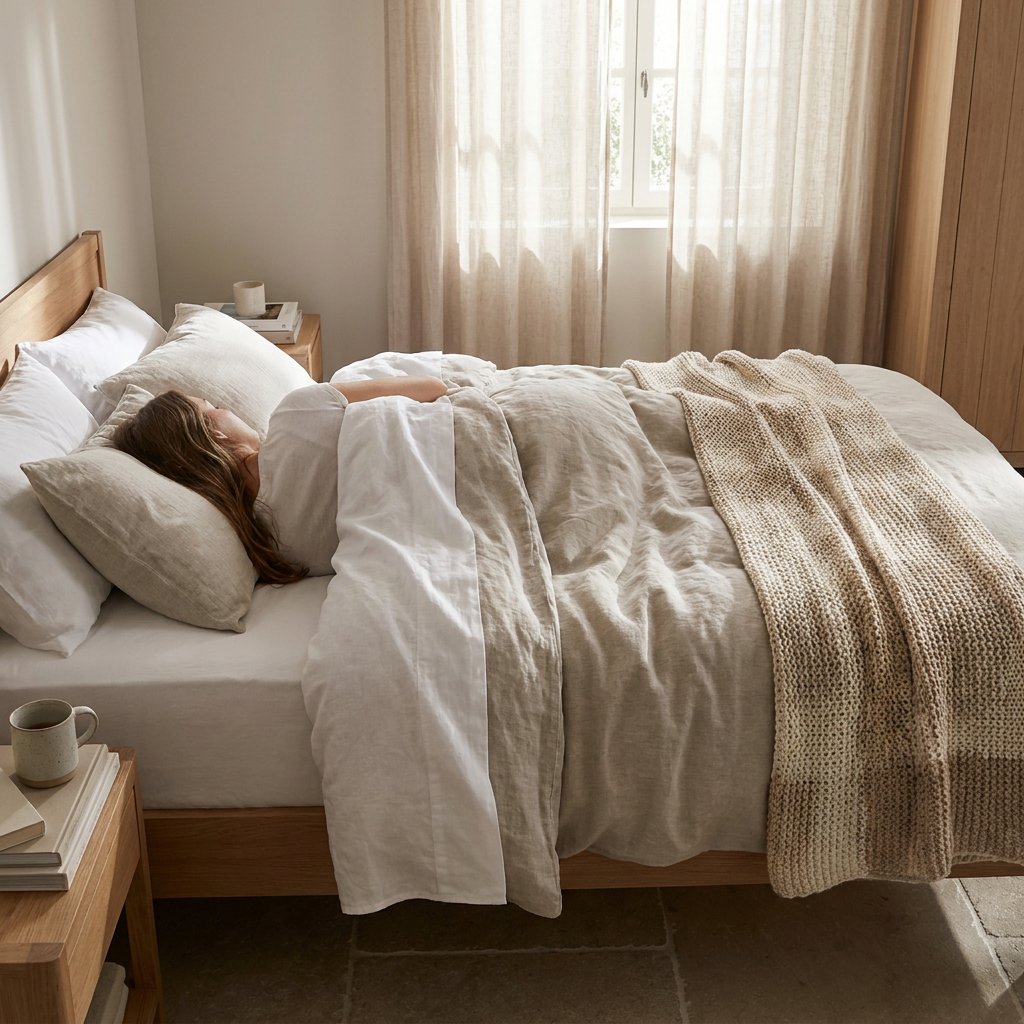

Most adults need about 7 to 9 hours of sleep per night. Eight hours is a helpful guideline, not a hard rule. Some people feel fine with a little less, while others need more sleep to wake up truly refreshed.
More importantly, your sleep need is personal and shifts with stress, exertion, recovery, health, and sleep quality. If you wake up tired despite getting enough hours, or you often nod off during the day, the issue isn’t always too little time in bed. It’s smart to look at sleep quality, your sleep rhythm, and the factors that support a better night’s rest.
The 7 to 9 hour guideline and what it really means
The short answer to how much sleep an adult needs is usually 7 to 9 hours per night. That range fits most healthy adults. The well known 8 hours is mostly an average, not a fixed target that’s right for everyone.
A single short or long night usually isn’t a big deal. After stress, a busy spell, or a rough night, you might temporarily sleep shorter or longer. Only when a pattern lasts for weeks does it say more about your true recovery. Chronic sleep deprivation more often leads to sleepiness, irritability, and reduced focus. But consistently sleeping long hours, especially if you still feel tired, can also signal there’s more going on than just “needing more hours.”
What shapes your personal sleep need
Not everyone needs the exact same amount of sleep, and it’s not something you can simply “train away.” You can get used to less sleep, but that doesn’t mean your body is fully recovering. How much you need depends on physical exertion, sports, mental load, stress, and your current life phase.
Illness, recovery after busy days, and an irregular schedule can mean you need more sleep for a while. Your genetic makeup and natural day night rhythm also play a role. Some people are naturally earlier risers, others later. As you get older, sleep often becomes lighter or more fragmented. That doesn’t make recovery less important, but it can change how you experience sleep. So don’t just look at hours in bed, but at how energized, sharp, and recovered you feel during the day.
Do men and women need the same amount of sleep?
For adult men and women, the same general guideline applies: usually 7 to 9 hours per night. That said, women may experience more sleep disruption in certain life stages or need a bit more sleep temporarily, for example due to hormonal fluctuations.
Comparing yourself with your partner or with averages doesn’t tell you much in practice. What matters more is whether you have enough energy during the day, can concentrate well, and feel your body and mind are recovering properly.
Deep sleep, REM, and light sleep: which matters most?
Sleep cycles through light sleep, deep sleep, and REM sleep. Each stage has its own function. There isn’t one sleep stage that’s “the most important” for everyone, and there’s no universal fixed number of deep sleep hours that every adult needs. A healthy balance across the whole night is usually more valuable than chasing a perfect score in a sleep app. Want to understand the logic behind it? Check out our guide to your sleep cycle.
| Sleep stage | Role | Good to know |
|---|---|---|
| Light sleep | Bridge to deeper sleep and part of a normal sleep cycle | This stage takes up a large part of the night and isn’t “bad” sleep. |
| Deep sleep | Especially key for physical recovery | The amount varies by person, night, and life stage. |
| REM sleep | Supports memory, learning, and emotional processing | REM returns several times a night and often gets longer toward morning. |
| The full sleep cycle | Delivers recovery together | Uninterrupted sleep is usually more important than focusing on a single stage. |
Enough hours but still tired? Then look at sleep quality
Logging enough hours doesn’t automatically mean your sleep is restorative. You can spend 8 or 9 hours in bed and still wake up tired if your sleep is fragmented or restless. Common culprits include stress, a disrupted sleep rhythm, pain, snoring or sleep apnea, alcohol, certain medications, and a restless night.
Staying in bed longer rarely fixes poor sleep quality and can even reinforce the pattern. Practical factors matter too: the right pillow, the right duvet, and calm, breathable bedding can improve comfort. In warmer months, temperature regulation is extra important, so take a look at cooling summer duvets. A machine washable coverless duvet, like the ones at HappyBed, makes it easier to keep your bed fresh and comfy. For ongoing issues, that’s no substitute for medical evaluation. For practical advice to improve your sleep length and quality right away, check out our 5 tips for better sleep.
When lots of sleep or daytime dozing is a signal
It stands out when you often seem to need more than about 9 to 10 hours of sleep, or when you frequently doze off during the day. After a short night, illness, or heavy exertion, extra sleep is perfectly normal. That’s different from a recurring pattern where you sleep long and still don’t feel restored.
Possible explanations include prior sleep debt, shift work, stress, burnout, depressive symptoms, alcohol use, medications, chronic conditions, or disrupted nights. Pay extra attention if long sleep coincides with concentration problems, headaches, irritability, loud snoring, or persistent fatigue. In that case, it’s wise to look deeper rather than just spending more time in bed.
How to improve your sleep rhythm and night’s rest
A better sleep rhythm usually isn’t about one perfect trick, but about habits that help your body feel sleepy and wakeful at consistent times. These tend to help most:
- Stick to a regular sleep and wake schedule as much as possible, even on weekends. There’s no single perfect bedtime; choose a rhythm that’s realistic and allows enough hours.
- Get plenty of daylight and movement during the day. Morning light and daytime activity support your body clock and make it more likely you’ll feel naturally sleepy at night.
- Limit caffeine late in the day and go easy on evening alcohol. It might help you fall asleep faster, but it often makes your sleep more restless.
- Build a calm evening routine. Fewer stimuli, softer light, and a predictable wind down can help you settle.
- Go to bed only when you’re genuinely sleepy. Lying awake for long stretches can weaken the bed sleep connection.
- Keep daytime naps short, especially in the late afternoon or evening. A long nap can reduce your sleep pressure at night.
- Make your bedroom sleep friendly: dark, quiet, and preferably a bit cool rather than warm.
- Consider comfort too. The right pillow and bedding that feel fresh and pleasant make it easier to fall asleep and stay asleep. If you have neck issues, check out a pillow for neck pain.
When it’s smart to seek help
If sleep problems persist, if you don’t feel recovered despite 7 to 9 hours, or if you regularly need very long nights to function, it’s wise to seek help. This is especially true if you’re very sleepy during the day, snore loudly, have breathing pauses, or notice your mood, concentration, or memory clearly worsening.
A GP or sleep specialist can help assess what’s going on. Sleep products like a weighted blanket for adults can improve comfort and your sleep environment, but they can’t diagnose or treat a sleep disorder. If your body keeps sending signals, further evaluation is often the best next step.